
Legacy company positioning for custom OEM blower wheel programs.
Custom Oven Fan Impellers for Commercial Oven Equipment
Source centrifugal wheels, vertical-blade impellers, axial fan blades and replacement oven wheels for commercial baking and hot-air equipment. Start with a drawing, sample or equipment details, then confirm the geometry, center interface, rotation, temperature profile, material and inspection requirements for the actual project.
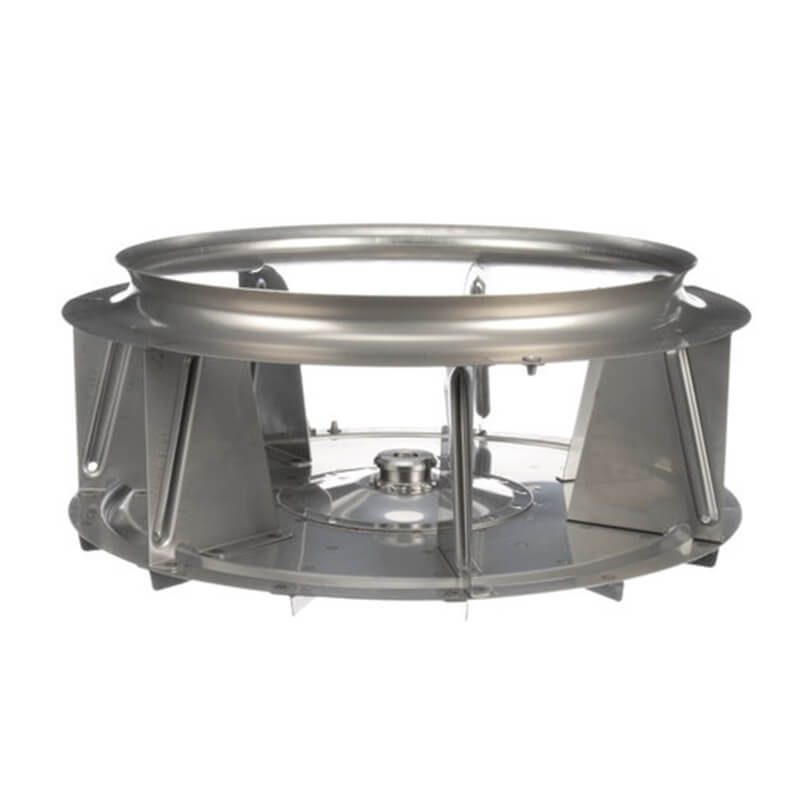
Axial, centrifugal and vertical-blade constructions from the legacy range.
From requirement review and drawing approval through inspection and packing.
Convection, combination, pizza, tunnel and other oven-air constructions.
Oven fan impeller constructions from the original TSLBlower range
The legacy page grouped oven-air components into centrifugal wheels, vertical-blade impellers and axial fan blades. These examples help identify the starting geometry; the equipment drawing and operating conditions still control the final selection.
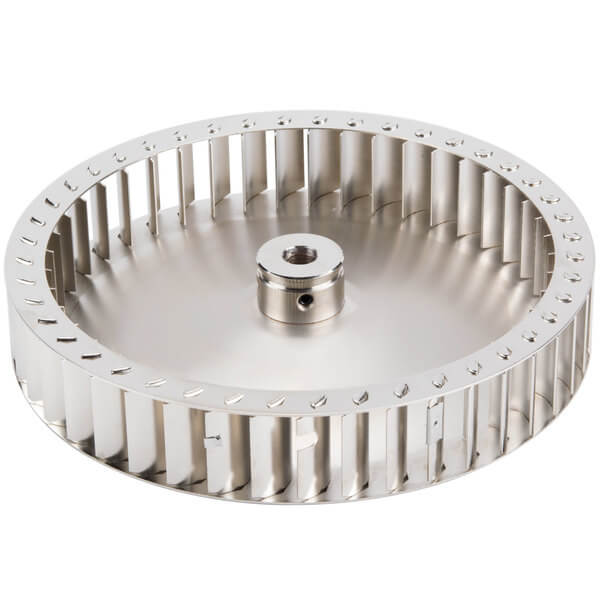
CENTRIFUGAL
Single-Width Convection Oven Wheel
A radial wheel construction with a center hub. Confirm diameter, width, blade geometry, hub, fastener, rotation and equipment clearance.
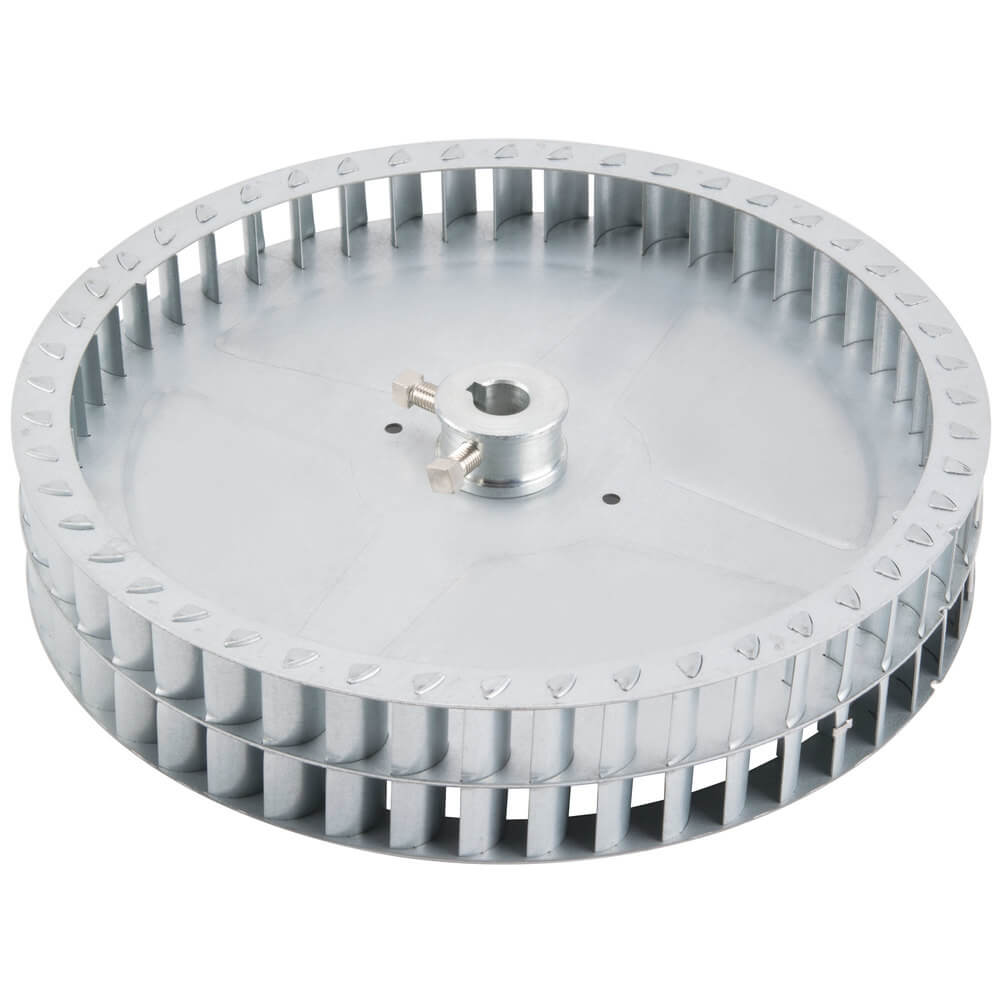
DOUBLE WIDTH
Double Convection Oven Wheel
The two blade rows, center plate and hub must be controlled together with overall height, installation offset and available space.
VERTICAL BLADE
Combination-Oven Impeller
A large open construction for hot-air circulation equipment. Review blade count and angle, rings, hub, rotation and surrounding chamber geometry.
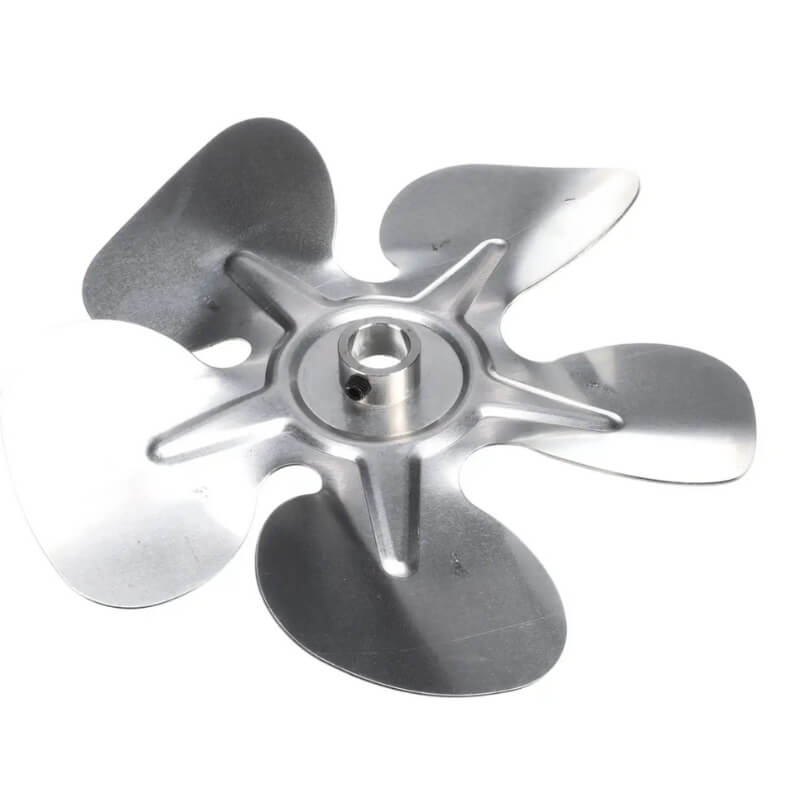
AXIAL BLADE
Pizza and Compact-Oven Fan Blade
A compact axial form from the legacy range. Blade diameter, pitch, shaft interface, direction and guard clearance must be matched to the appliance.
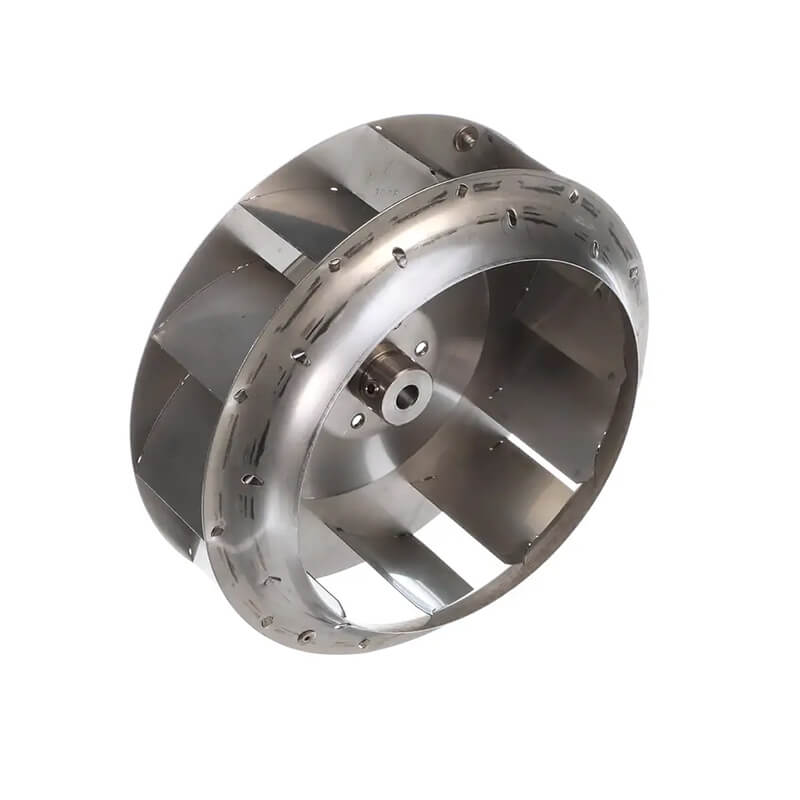
TUNNEL OVEN
Open Hot-Air Impeller
An open impeller example for tunnel and baking equipment. Temperature, cleaning exposure, material and documentation are project inputs—not image-based assumptions.
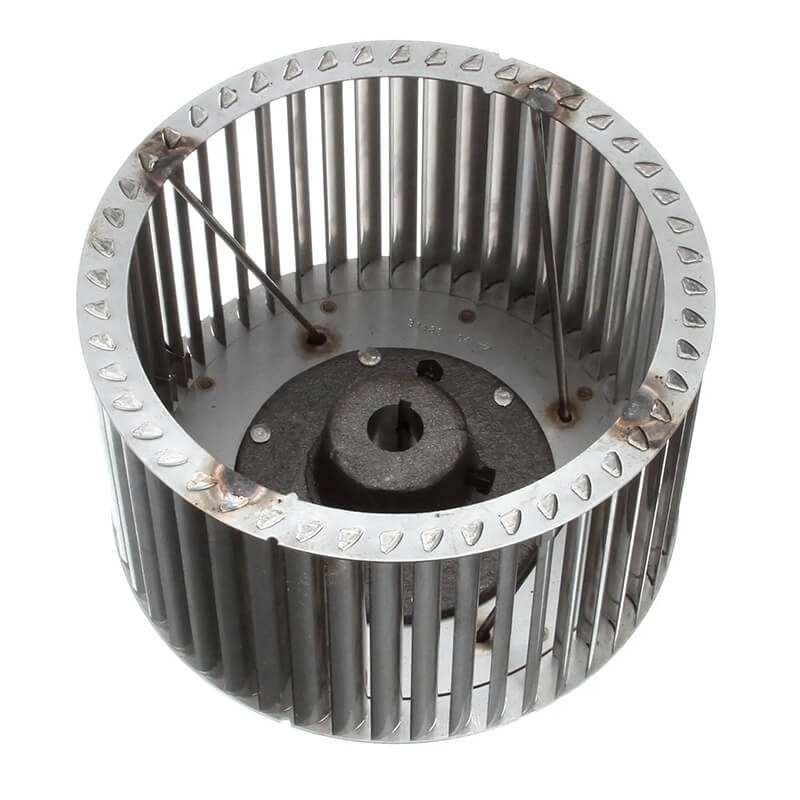
CUSTOM CYLINDRICAL
Deep Wheel Construction
A deeper wheel geometry where blade height, reinforcement, runout, interface and balance requirements must be stated in the approved specification.
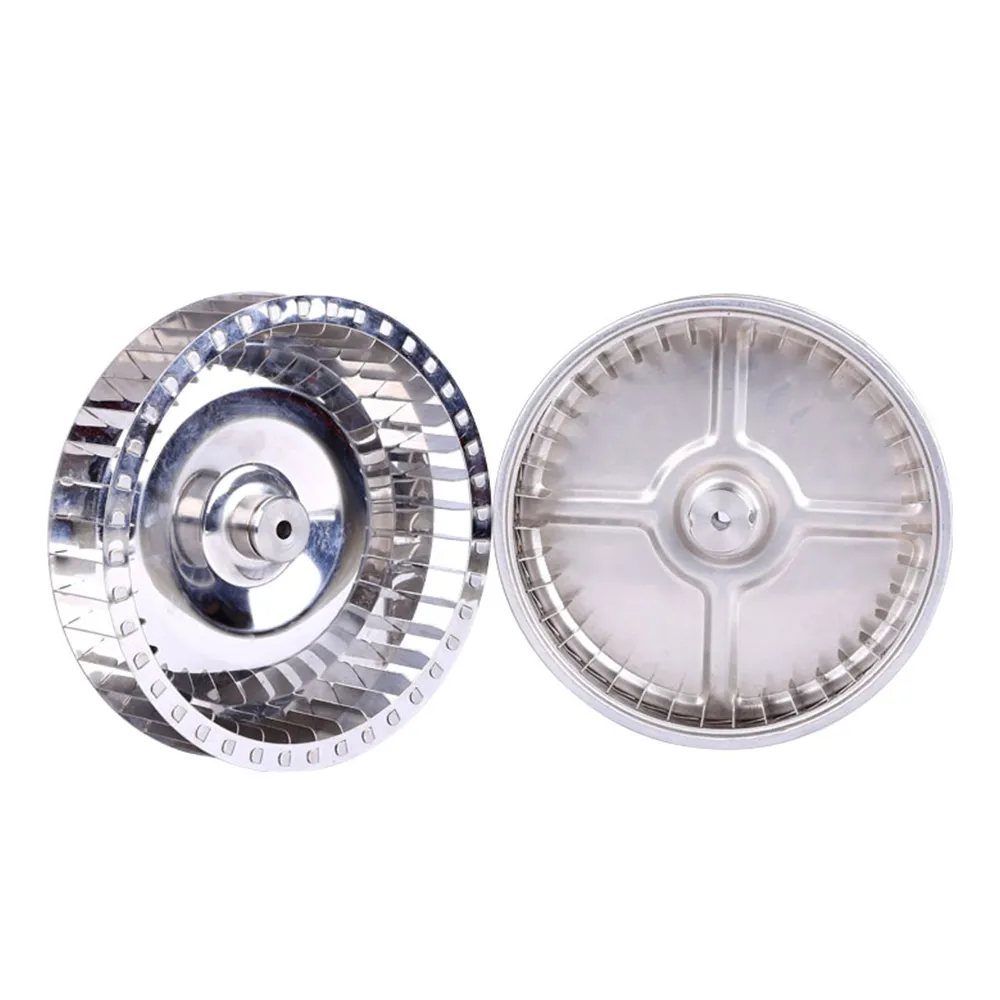
Similar diameter does not mean interchangeable
For a new build or replacement project, approve the complete geometry and installation—not only the outside diameter.
Wheel envelope
Outside diameter, total height, blade depth, dish or offset, ring geometry and surrounding clearance.
Center interface
Bore, keyway, flat, threads, fastener, hub height, motor-side orientation and load-transfer features.
Rotation reference
Clockwise or counter-clockwise must be stated from a named viewing side and confirmed with blade orientation.
Installed context
Equipment model, heat-source location, chamber, guard, nearby structures and access for cleaning or service.
Temperature, material and food-related claims require project evidence
The old page describes stainless steel, high-temperature duty, corrosion resistance and even heating. Those are useful requirement categories, but they cannot be converted into a universal product guarantee without a defined part, material specification, operating profile and validation method.
Provide normal and peak temperature, duration, cycle frequency, heat-source distance and the component’s installed position.
State the required grade, thickness, finish or coating and the source of that requirement. Appearance alone cannot verify them.
Identify oil, vapor, moisture, residue, detergent, cleaning frequency and any contact or hygiene documentation required by the target market.
Air circulation, temperature uniformity, cooking outcome, noise and energy use depend on the complete oven system and its validation conditions.
Seven stages for a custom oven fan impeller project
This sequence preserves the useful workflow from the original page while making each approval boundary explicit.
- 01
Requirement and evidence review
Collect the equipment context, drawing or sample, temperature profile, interface, rotation, material, quantity and requested documents.
- 02
Drawing and feasibility confirmation
Separate confirmed dimensions from observations and unknowns, then agree the controlled drawing, revision and acceptance source.
- 03
Material and process planning
Confirm material and surface requirements, tooling, forming or cutting, joining, assembly and the evidence required for the chosen route.
- 04
Forming, joining and assembly
Manufacture the approved construction using the project-specific route. Actual operations depend on geometry and material.
- 05
Interface and orientation checks
Verify critical dimensions, center interface, offset, blade orientation, rotation marking and visible assembly requirements.
- 06
Balance and inspection scope
Apply the specified balance and inspection method, frequency, acceptance criteria and records. No generic balance grade is assumed.
- 07
Approval, packing and delivery
Release only after the agreed sample or production approval, identification, protective packing and requested documentation are complete.

Commercial oven and hot-air equipment contexts
The legacy range includes components used as starting references for convection ovens, combination ovens, pizza and tunnel ovens, baking equipment and hot-air systems. Suitability is confirmed only after the equipment and duty are reviewed.
Connect the impeller design to manufacturing and inspection evidence
A professional quotation should make the controlled input, manufacturing route, inspection plan and supplied records visible—not rely on generic quality language.
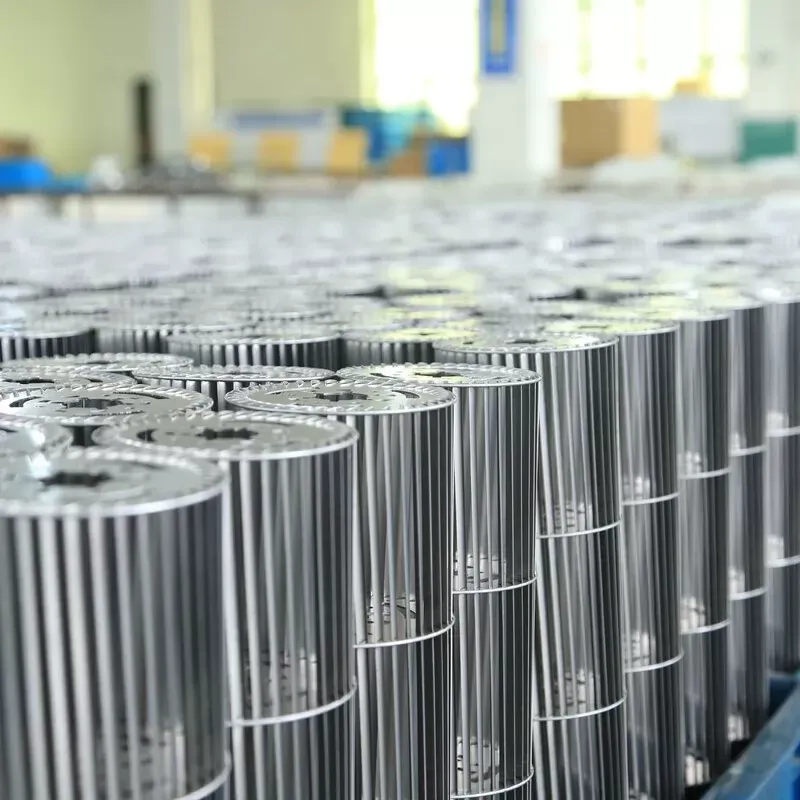
01 / DEVELOPMENT
Drawing or sample route
New products can start with a controlled drawing. Replacement projects can start with sample photos and measurements while uncertainty is recorded.
Review custom development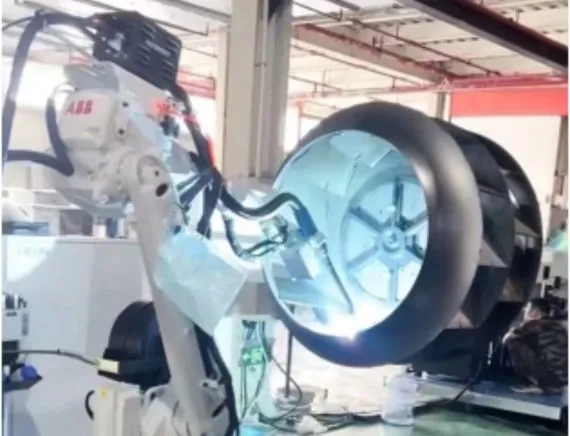
02 / MANUFACTURING
Project-specific process route
Cutting, forming, stamping, joining and assembly depend on the approved geometry and material. Actual operations are confirmed for the project.
Review manufacturing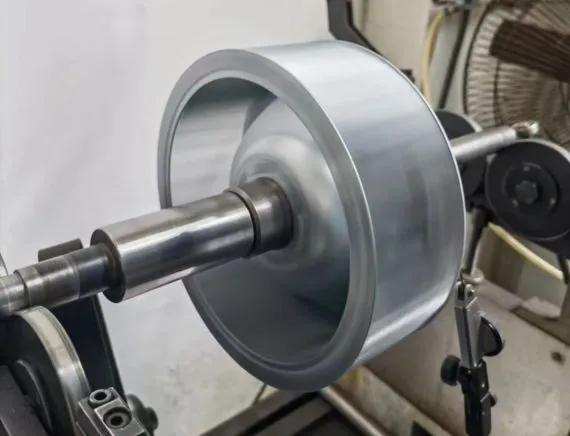
03 / QUALITY
Inspection matched to requirements
Define critical dimensions, interface, rotation, appearance, balance requirement, sample frequency and documentation in the order specification.
Review quality planningInformation needed for an oven fan impeller quote
You can start with incomplete data. Label unknown fields so the first review can identify the next evidence or approval step.
| Input group | What to send | What it controls |
|---|---|---|
| Starting reference | Drawing and revision, sample, equipment model, part number or labelled photos | The closest geometry and current approval source. |
| Wheel geometry | OD, total height, blade geometry, ring/plate construction, offset and clearances | The component envelope and air-path relationship. |
| Center interface | Bore, key, flat, thread, fastener, hub height, shaft or motor drawing | Fit, orientation and torque transfer. |
| Operating context | Rotation/viewing side, speed, air path, chamber, heat source and maintenance access | Installation and system-level validation. |
| Environment | Normal/peak temperature profile, cycling, media, oil/vapor, cleaning and material needs | Material, surface and evidence review. |
| Quality and commercial | Tolerances, balance requirement, requested records, quantity, target date and market | Inspection, tooling, production, documentation and quotation. |
Oven fan impeller FAQ
The answers below retain practical subjects from the original page while separating component facts from system-performance assumptions.
What oven fan impeller types can TSLBlower review?
TSLBlower can review centrifugal oven wheels, double-width convection wheels, vertical-blade impellers, axial fan blades and customer-specific hot-air impellers. Send the drawing, sample or equipment details to confirm the applicable construction.
What information is needed for a custom oven fan impeller?
Provide a drawing or clear front, back, side and center-interface photos; overall and mounting dimensions; rotation and viewing side; equipment context; temperature profile; material or document needs; quantity and target market.
What materials are used for oven fan impellers?
The original range includes stainless-steel and other metal constructions, but the required grade cannot be selected from the product category alone. Confirm temperature, media, cleaning, surface and documentation needs before material approval.
Can TSLBlower confirm a temperature limit from a photo?
No. A photo cannot verify material, thickness, treatment, coating or temperature capability. Provide normal and peak temperature, exposure duration, cycling and heat-source location; any published limit must be supported by project evidence.
Can an oven impeller be reproduced from a worn sample?
A worn sample can start the review, but wear, deformation and missing material information create uncertainty. Compare it with equipment interfaces and, where possible, an approved drawing or unused reference before final approval.
How is oven impeller rotation specified?
State the viewing side used to describe clockwise or counter-clockwise rotation and include a marked photo. Confirm rotation together with blade orientation, shaft side and installation position.
How is an oven fan impeller balanced and inspected?
The project specification should define the required balance method and grade, operating speed context, dimensional characteristics, inspection frequency and acceptance records. These conditions cannot be assumed from the product family alone.
How should an oven fan impeller be maintained?
Follow the oven manufacturer’s isolation, removal, cleaning and reinstallation instructions. Oil or residue can affect the assembly, but cleaning agents, frequency and acceptance should match the approved material, surface and equipment procedure.
Request a custom oven fan impeller quote
Send the closest impeller type, drawing or sample photos, dimensions, center interface, rotation, operating-temperature profile, quantity and documentation requirements.