
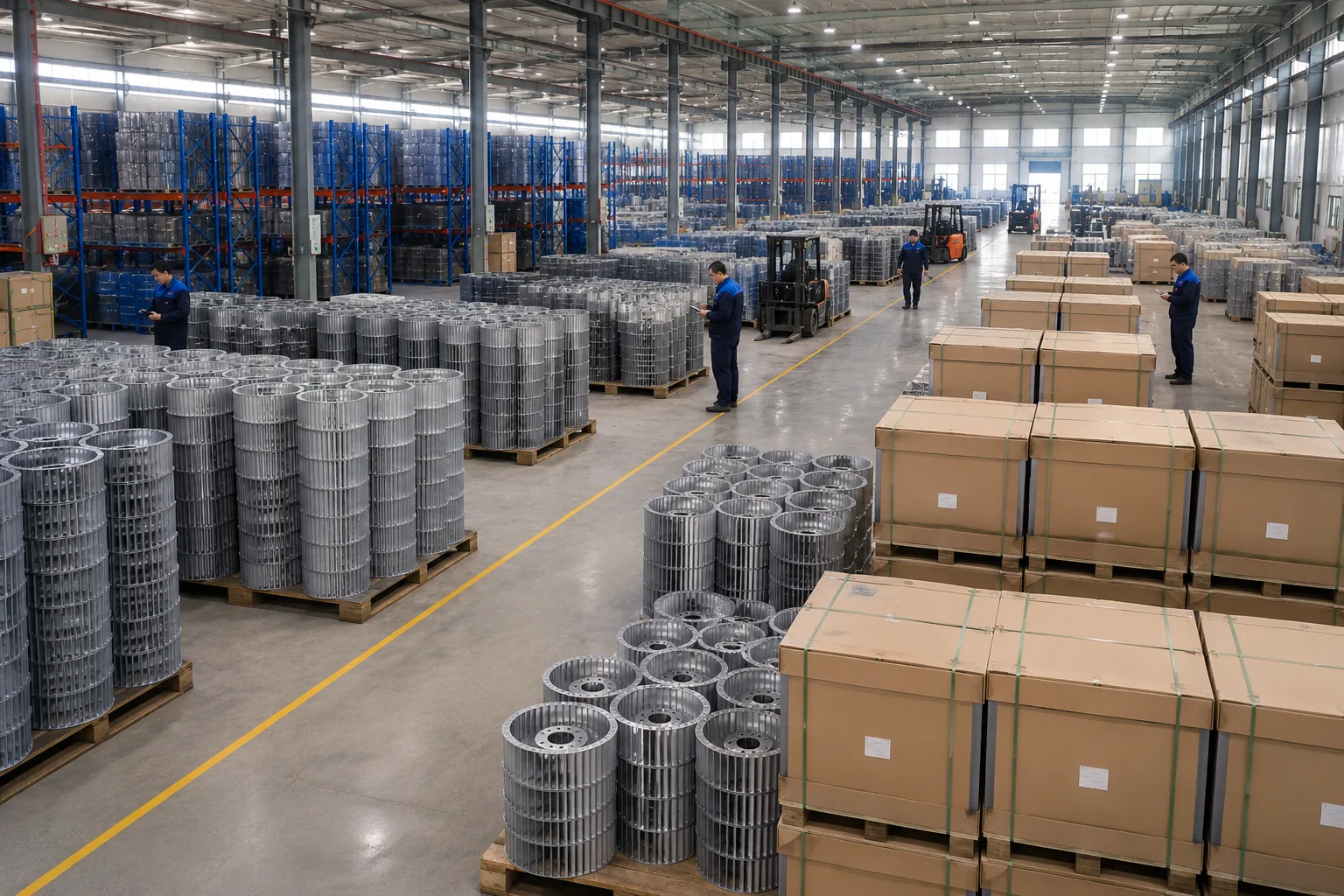
Forward curved, backward curved, cross-flow, oven and replacement routes.
Blower Wheel Types for OEM Projects
Compare five project routes by component structure, required inputs and approval risk. Then open the route closest to your drawing, equipment or existing sample.
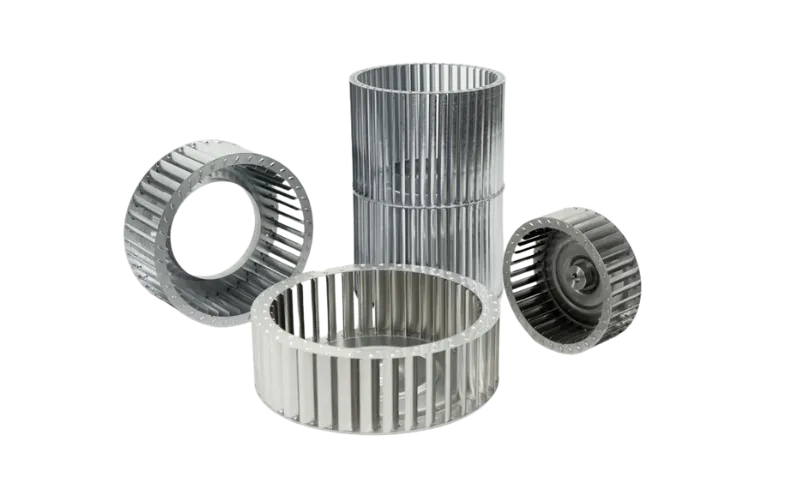
A broad project range for compact equipment through industrial assemblies.
An existing component can start a replacement or development review.
Capacity planned for recurring OEM supply programs.
Compare structure, project context and the first inputs to collect
The comparison below is a routing tool. It helps your team ask the right questions before a drawing, sample or quotation is approved.
| Product route | How to identify it | Start the review with | Do not assume |
|---|---|---|---|
| Forward curved | Multiple blades curve generally in the direction of rotation; often called a squirrel-cage wheel. | Inlet arrangement, diameter, width, hub or bore, rotation and equipment context. | Airflow, pressure or noise from wheel geometry alone. |
| Backward curved | Blade outlet direction curves generally opposite rotation; terminology may include backward inclined. | Geometry, duty and speed context, material or environment, mounting and validation. | Efficiency or interchangeability without system information. |
| Cross-flow / tangential | A long cylindrical wheel used with a housing to move air across its width. | Overall and active length, diameter, both shaft ends, air channel and rotation. | Uniform airflow or fit from length and diameter alone. |
| Oven fan impeller | An impeller used within commercial oven or hot-air equipment assemblies. | Front/back/side views, center interface, offset, rotation, environment and equipment. | Material or temperature capability from appearance. |
| Replacement from sample | An existing or obsolete component without a reliable production drawing. | Photo set, measurement points, wear notes, markings, rotation and equipment problem. | That a worn sample represents the intended specification. |
Match the component before comparing specifications
The directory is intentionally compact. Use the structure cue to choose a review path, then use the product page to collect dimensions, interfaces and system inputs.
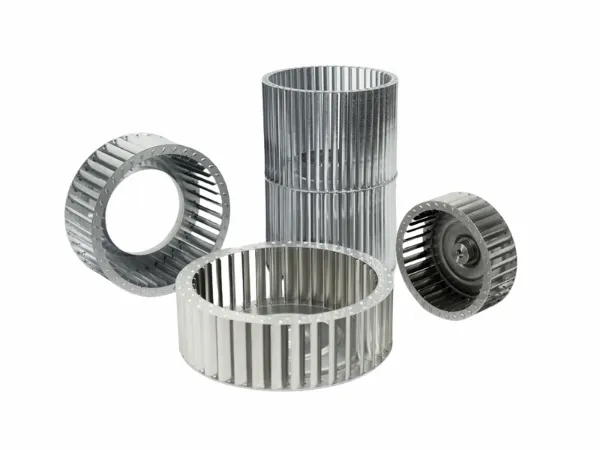
01 / Forward curved
Single or double inlet wheel routes
Begin with inlet arrangement, diameter, width, hub or bore, mounting and rotation.
Open Forward Curved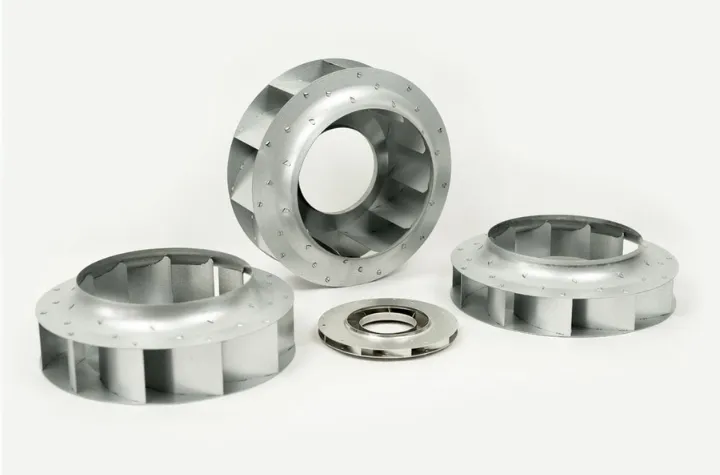
02 / Backward curved
Geometry with system-duty context
Organize wheel geometry, speed, duty, environment, interface and validation inputs.
Open Backward Curved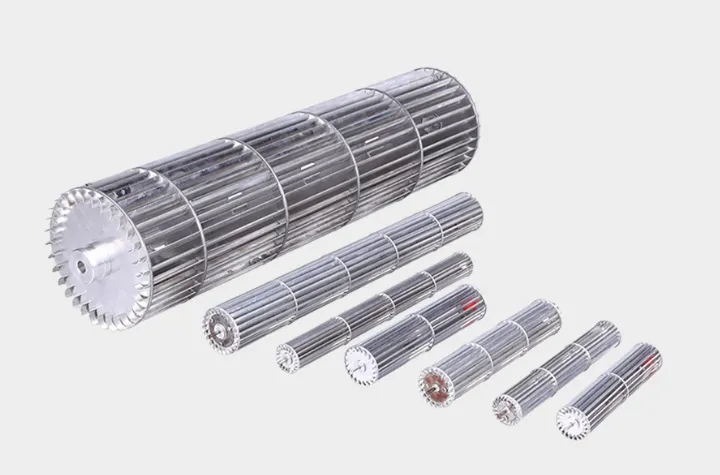
03 / Cross-flow
Length, shaft ends and air channel
Document active length, diameter, segment layout, both shaft ends and surrounding housing.
Open Cross-Flow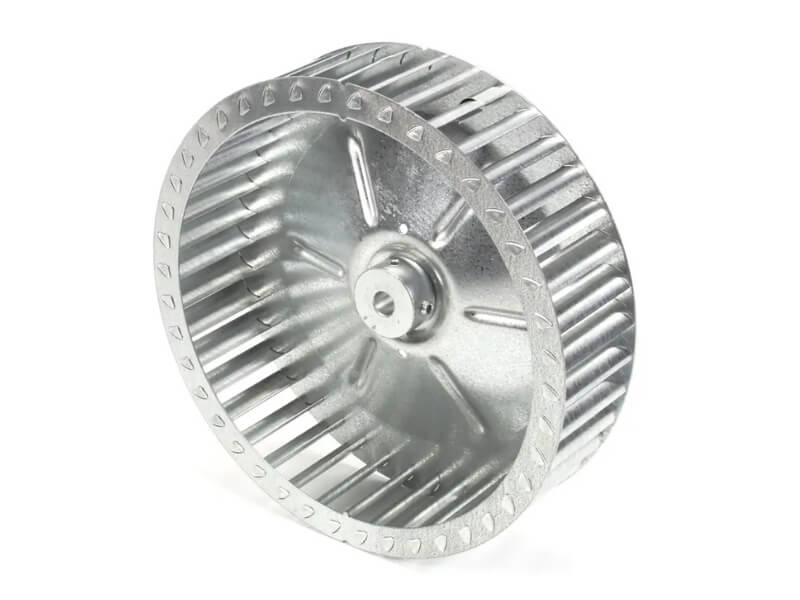
04 / Oven impeller
Environment, center interface and offset
Bring equipment context, rotation, mounting, sample or drawing and operating environment.
Open Oven Impellers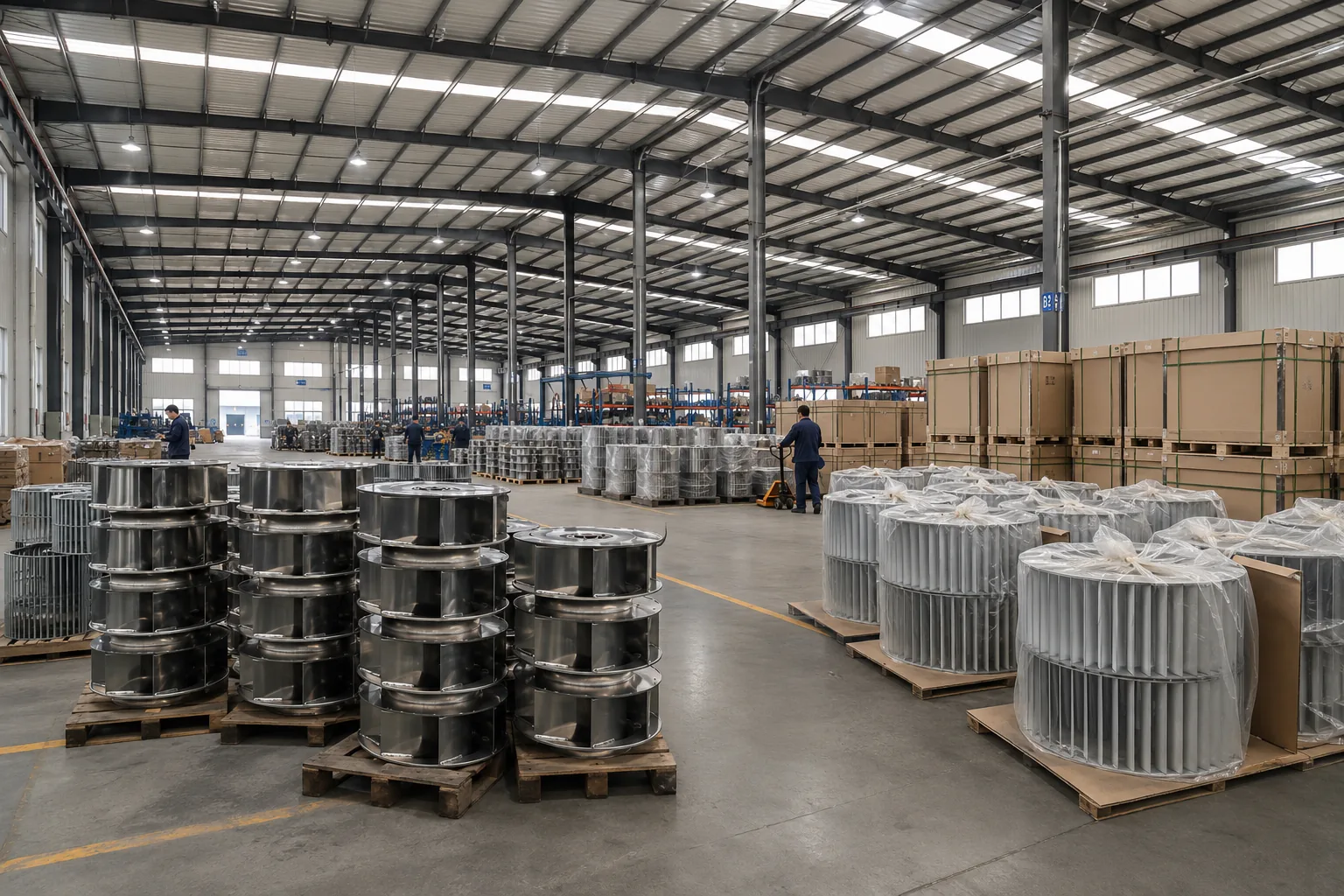
05 / Replacement review
No reliable drawing or obsolete component
Start from a photo set, measurement points, wear notes, markings, rotation and equipment context.
Open Sample ProtocolSix inputs that change the product decision
If one of these areas is unknown, mark it as unknown instead of selecting a wheel by appearance or diameter alone.
Read the Selection Guide- Equipment and air pathWhat the component does, the housing or channel around it and where air enters and leaves.
- Duty and speed contextAvailable flow, pressure, operating range, motor or control information and the method used to validate results.
- Available space and clearancesThe physical envelope, inlet, housing and service-access constraints around the wheel.
- Mechanical interfacesHub, bore, shaft ends, key or fastener, mounting positions, offsets and critical dimensions.
- Environment and materialsTemperature, humidity, dust, cleaning or media exposure and required market documentation.
- Quality and approvalDrawing revision, tolerances, inspection, balance, samples, records and packaging requirements.
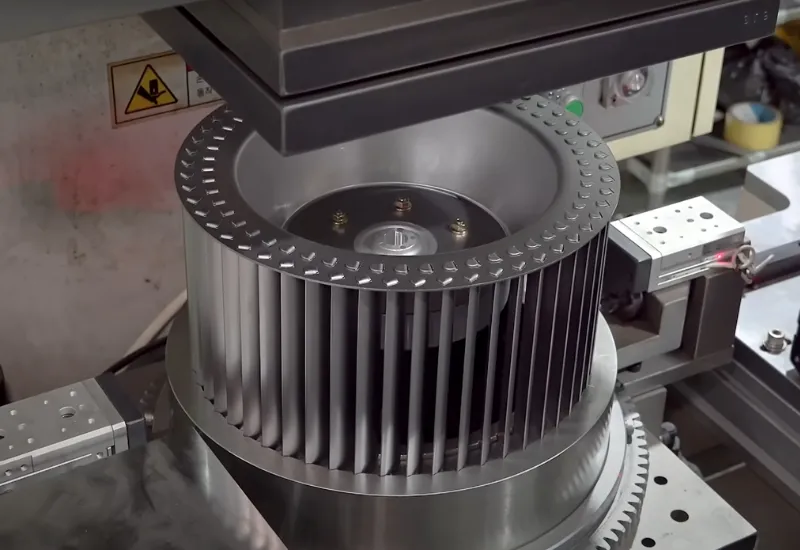
Connect the approved part to manufacturing and inspection evidence
A category image identifies a route. Project records establish what was approved, produced and checked.
- 01
Approved source
Drawing revision, sample approval or confirmed specification.
- 02
Production route
Actual operations, tooling and process-control points for the wheel family.
- 03
Inspection record
Characteristic, method, acceptance source and applicable result.
- 04
Project handoff
Identification, orientation, packaging and requested documents.
Move from a product route to an approved project scope
The same wheel family may follow different routes depending on tooling, material, quantity, available data and validation.
See the complete custom-development pathIdentify the likely product route
Use geometry and equipment context to direct the enquiry to the relevant review.
Collect drawing, data or sample inputs
Separate confirmed values, unknown fields and dimensions that require a defined measurement method.
Review technical and commercial boundaries
Clarify manufacturability, tooling, approval, quantity, documentation and timing factors.
Approve the applicable specification
Use the agreed drawing, sample or validation record before releasing a production version.
Questions before choosing a product route
These answers define the classification boundary. Your approved project records define the final part.
What blower wheel types can be reviewed for customization?
TSLBlower currently organizes project reviews around forward curved, backward curved, cross-flow or tangential wheels, oven fan impellers and replacement projects started from samples. Actual manufacturability and specifications must be confirmed for each enquiry.
Are forward and backward curved wheels interchangeable?
They should not be treated as interchangeable. Blade geometry, system curve, speed, space, mounting and operating requirements affect the choice. Provide equipment and duty information for an engineering review rather than replacing one type based only on diameter.
Can I request a product without knowing its category?
Yes. Start with equipment information, clear photos, key dimensions, rotation, mounting and the performance or replacement problem you are solving. The team can then identify the most relevant project route and missing inputs.
Are these standard stock products?
This website is planned around custom project enquiries. Stock status, tooling, MOQ and timing must be confirmed for the specific part and quantity; they should not be assumed from a category page.
Ready to quote your blower wheel requirement?
Share the wheel type, dimensions, interface, quantity and equipment context available to your team.