
Compact through larger tangential wheel references.
Custom Cross Flow Blower Wheels for OEM Equipment
Source aluminum cross flow blower wheels and tangential impellers for cooling, heating, ventilation and other low-profile air-moving equipment. Start with a legacy diameter and length, an existing sample or a new drawing, then confirm both shaft ends, segment layout, housing, rotation and operating context.
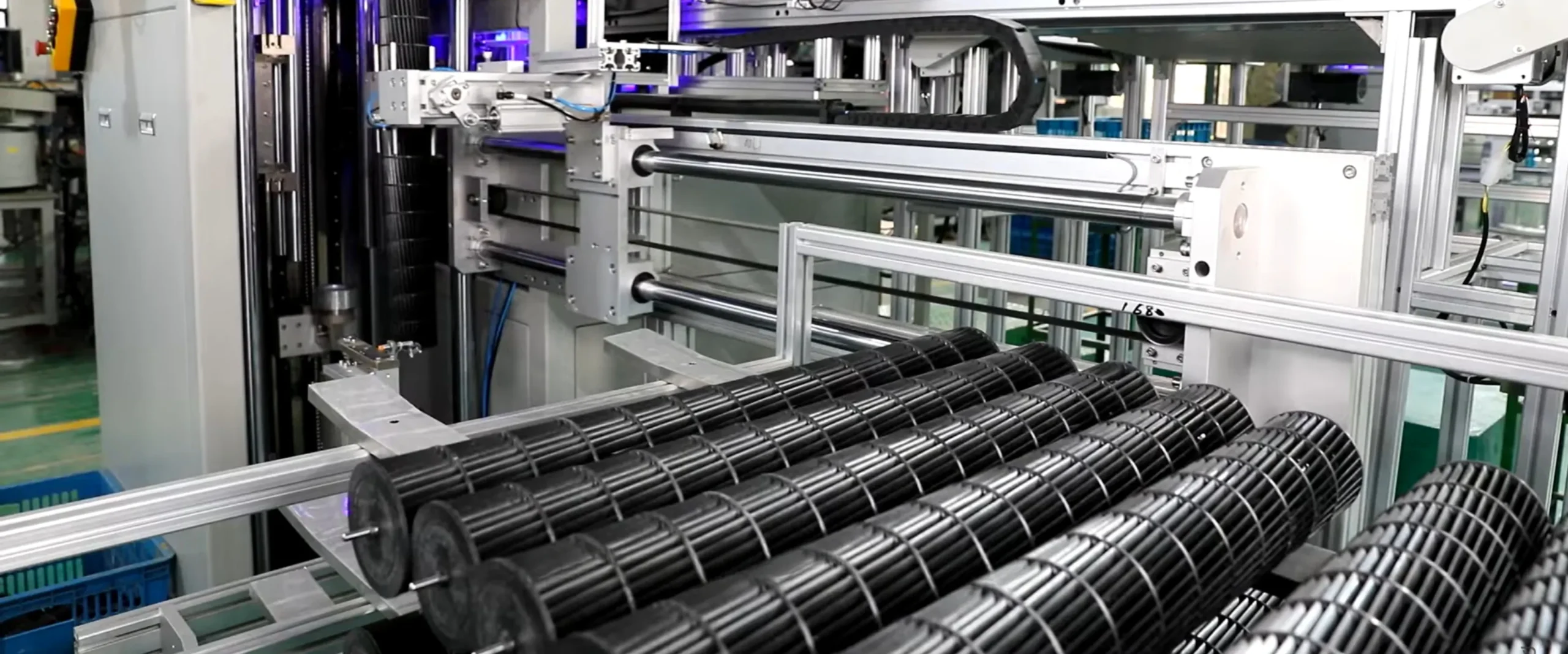
Overall and active length are confirmed per project.
Sampling, tooling and freight are quoted by project.
Custom manufacturing support from Dongguan, China.
Cross flow blower wheel diameter references
The former TSLBlower product page presented multiple diameter families. These images are useful starting references, but final diameter, active length, segment count, shafts and installation details are made to the approved specification.
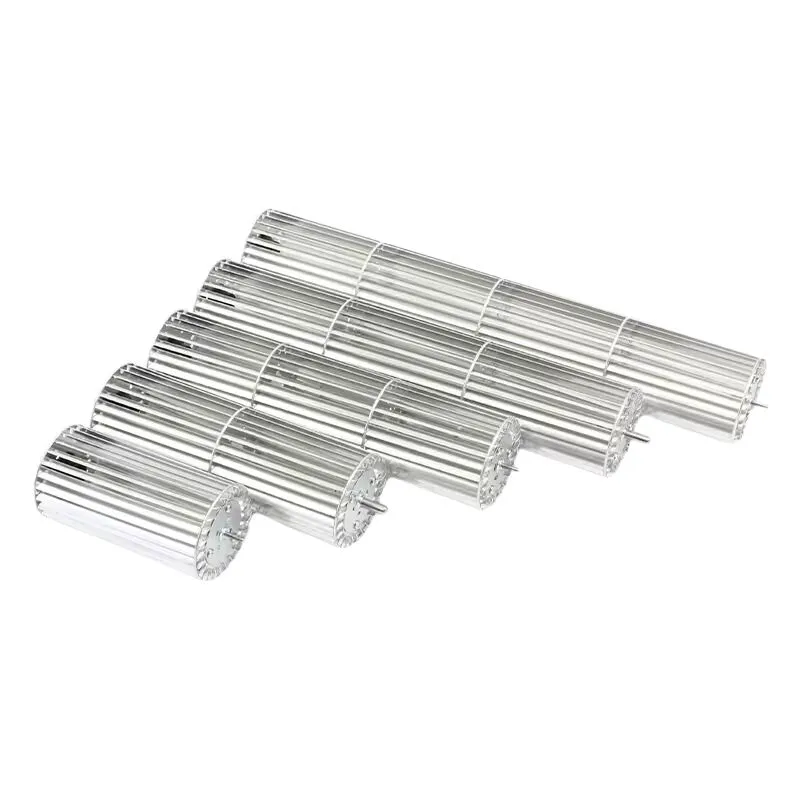
30 mm reference
Compact tangential wheel
Use the actual drawing to confirm diameter, active length, shaft ends and mounting.
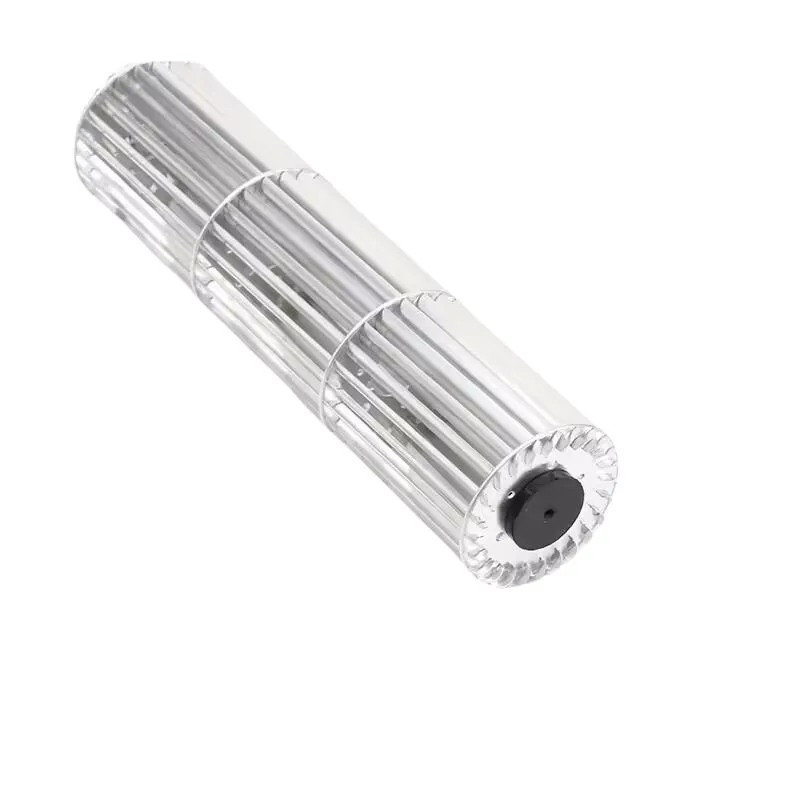
43 mm reference
Small-diameter wheel
Suitable as a geometry reference for compact equipment and narrow air channels.
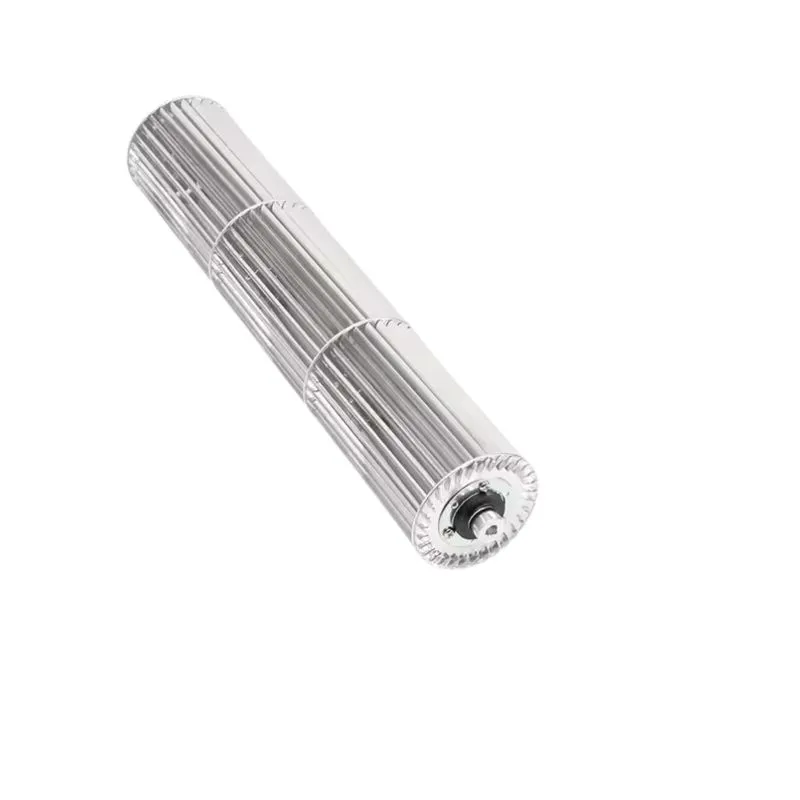
50 mm reference
Multi-segment wheel
Confirm the number and position of segments, discs and end interfaces.
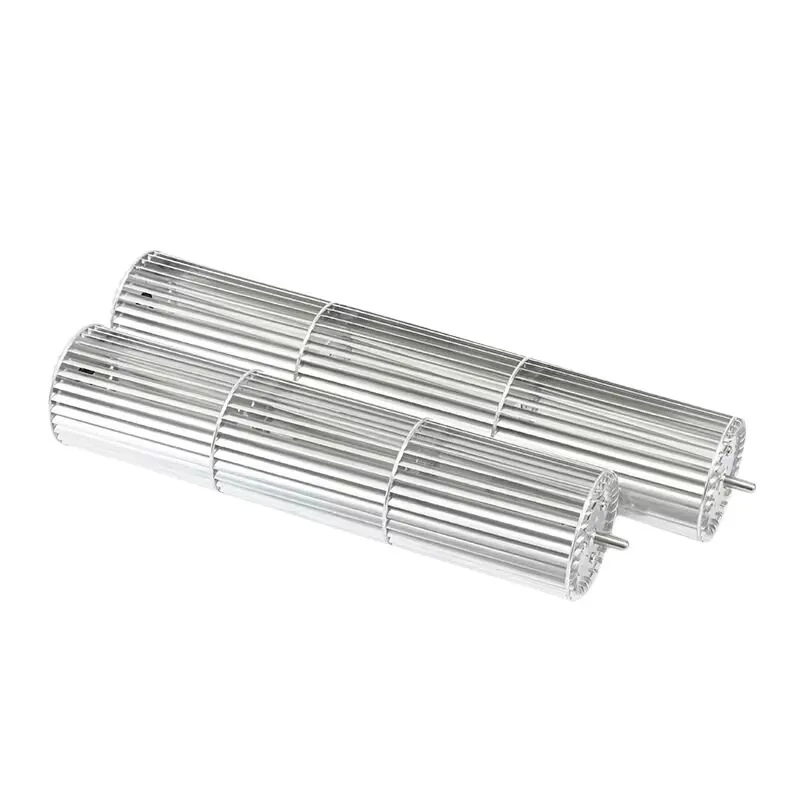
60 mm reference
Long cylindrical assembly
Overall length and active blade length must be identified separately.
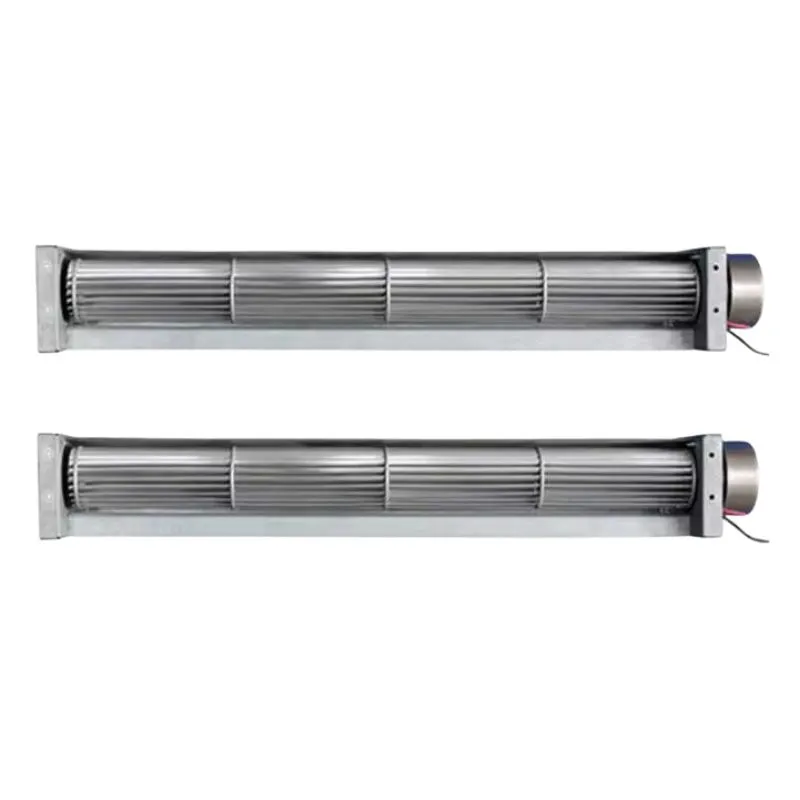
65 mm reference
Custom shaft configuration
Document the drive end and support end as two independent interfaces.
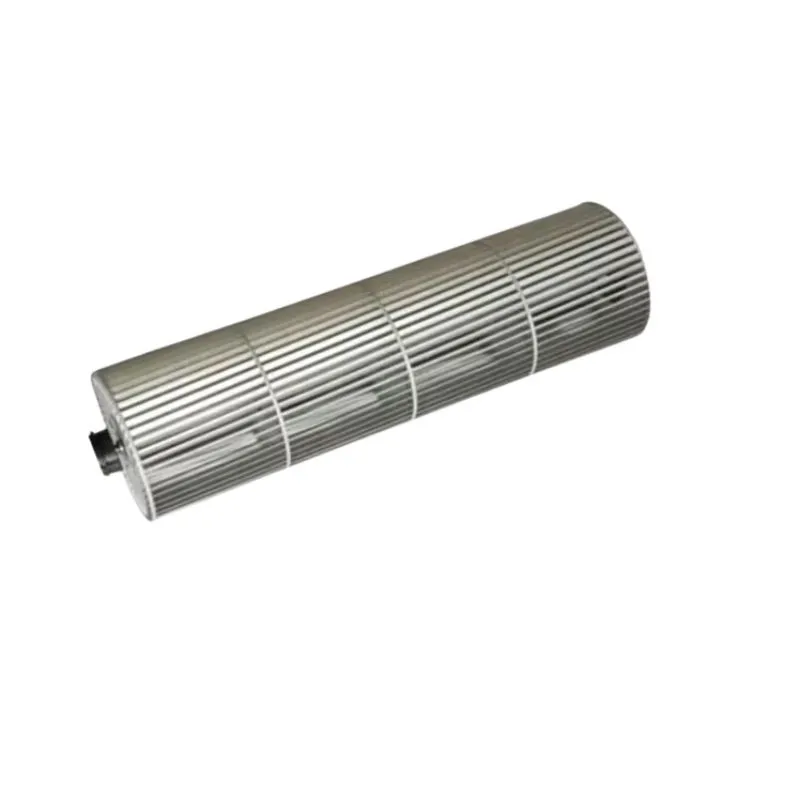
97 mm reference
Larger diameter route
Housing, clearance, speed and duty context are required before approval.
Legacy cross flow range and customization options
The values below were published on the previous TSLBlower product page and are retained as a sourcing baseline. Availability, tolerances, tooling and the final construction are confirmed in the current quotation and approved drawing.
| Item | Legacy published baseline | What to confirm for the RFQ |
|---|---|---|
| Wheel diameter | 30-125 mm | Outside diameter, measurement datum, housing clearance and allowable envelope. |
| Wheel length | 106-800 mm | Overall length, active blade length, segment arrangement and end projections. |
| Material | Aluminum | Alloy or material requirement, environment, cleaning and applicable documents. |
| Surface option | E-coating available for added protection | Exposure, coating specification, appearance and validation requirements. |
| Design support | Custom design and application review available | Drawing, sample, operating context, interface, quantity and approval route. |
Range note
A diameter and length match does not prove fit or performance. The left and right shaft ends, rotation reference, housing, air channel, speed and project validation method remain part of the engineering review.
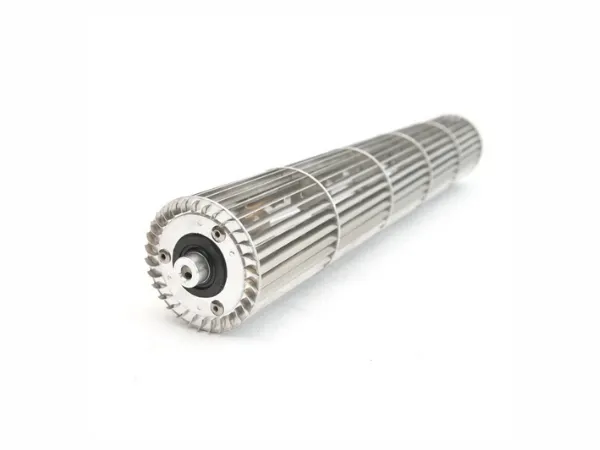
Define the complete cylindrical assembly
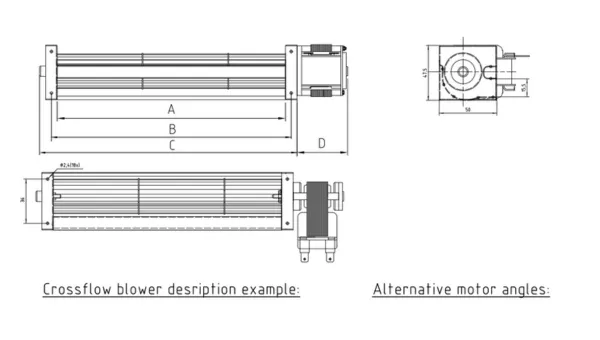
Cross-flow and tangential describe a wheel family, not an interchangeable standard part. Record the active cylinder, segment layout, both end interfaces and air-channel installation before confirming a manufacturing route.
Review the selection guideOverall and active length
State whether the length includes end plates, hubs, bearings or shaft projections and identify the measurement datums.
Diameter and segment layout
Provide outside diameter, the number and position of blade sections, intermediate discs, joints and supports.
Drive and support ends
Show each shaft shape, diameter, length, flat, key, thread, bearing or mount independently; do not assume symmetry.
Rotation and motor side
State CW or CCW from a marked viewing side and identify the motor side, support side and installation orientation.
Housing and air channel
Send the inlet, outlet, wheel clearances, available space, guides, screens and service-access constraints.
Duty and environment
Include speed, target airflow and pressure when known, operating cycle, temperature, moisture, cleaning and market requirements.
Treat wide, uniform air delivery as a system objective
The previous page described compact installation, low noise and evenly distributed airflow. Those results depend on the complete blower assembly, so they should be validated with the housing, inlet, outlet, motor, speed, clearances and operating point.
Diameter, length, blade and segment geometry define only the impeller component.
Inlet, outlet, guides and wheel-to-housing clearances influence air distribution.
Drive, control range, installation and operating point affect the assembled result.
Agree on the measurement method, conditions and acceptance values for the actual equipment.
Applications for cross flow and tangential wheels
The legacy page listed heating, cooling and ventilation equipment, heat pumps, air conditioners, air curtains, ovens, fireplaces, bottle or can coolers, gas heaters, air purifiers, filtration systems, drying equipment, medical devices and electronics. Each application still requires project-level fit and validation.
From approved design to manufacturing and inspection
The previous site included design, production and quality-control material. The applicable process, equipment and inspection record must match the selected wheel construction and approved project requirements.
DESIGN REVIEW
Resolve dimensions and interfaces
Turn the drawing or sample into an approved geometry, shaft-end and installation record.
Review design support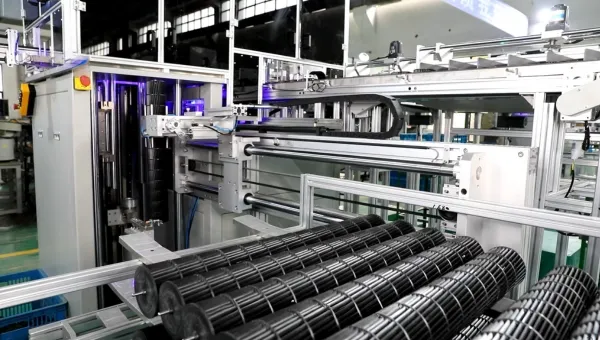
MANUFACTURING
Match the route to the design
Confirm tooling, assembly, process controls and change approval for the actual wheel.
Review manufacturing
QUALITY CONTROL
Define the inspection plan
Specify datums, dimensions, interface checks, balance requirements and records where applicable.
Review quality inspectionCross flow blower wheel RFQ checklist
Label all photographs as drive side or support side and include a scale. If some operating values are unknown, mark them clearly so the engineering review can identify the next required input.
| Information | What to send | Why it matters |
|---|---|---|
| Drawing or sample | Latest drawing revision or full wheel photos showing both ends, segments, mounts and labels. | Separates the approved geometry from a visual family match. |
| Dimensions | Overall and active length, diameter, segment positions, end projections and critical tolerances. | Defines the cylindrical envelope and manufacturing reference. |
| Shaft ends | Left and right shape, diameter, length, flat, key, thread, bearing and support details. | Prevents motor-side, symmetry and mounting mistakes. |
| Installation | Rotation viewing side, motor side, housing, inlet, outlet, clearances and available space. | Connects the wheel to the actual equipment assembly. |
| Operating context | Speed, duty target, operating cycle, environment, material, coating and validation needs. | Defines the system boundary and evidence required. |
| Commercial context | Prototype or production quantity, target market, timing and requested documents. | Supports a project-specific quotation and approval path. |
Cross flow blower wheel FAQs
Answers based on the previous TSLBlower product page, with project-specific limits made explicit.
What cross flow blower wheel sizes does TSLBlower list?
The previous product page listed diameters from 30 to 125 mm and lengths from 106 to 800 mm. These are sourcing references, not guaranteed combinations. Send the drawing or sample because active length, segments, shafts, mounting and housing still determine the final design.
What material and finish options are listed?
The legacy page listed aluminum construction and optional e-coating for added protection. The actual alloy, coating specification, environment, appearance, validation and document requirements must be confirmed for the project before release.
What is the MOQ for a cross flow blower wheel?
The previous product policy accepted enquiries from one piece. Sample, tooling, unit and freight costs depend on the wheel geometry, shaft configuration, quantity and destination and are confirmed in the quotation.
How long does delivery take?
The legacy page stated approximately 3-7 days for express transport and about 30 days for sea transport. These are transport references rather than manufacturing lead times. Current production, packing and transit schedules are confirmed after technical and commercial approval.
Can TSLBlower provide samples?
Yes. The previous policy offered sample support, with possible charges depending on the sample quantity and shipping requirement. The sample design, tooling, cost, freight and approval plan are confirmed before the sample order.
Where are the cross flow blower wheels manufactured?
The original product page states that TSLBlower manufactures cross flow blower wheels at its factory in Dongguan, China. The applicable production route and evidence are confirmed for the actual project.
Does a cross flow wheel guarantee uniform airflow or low noise?
No universal wheel-only result should be assumed. Air distribution and noise depend on the housing, inlet, outlet, motor, speed, wheel clearances and operating point. Share the equipment context and validation conditions for engineering review.
Request a custom cross flow blower wheel quote
Send the closest diameter reference, overall and active length, segment layout, both shaft ends, housing or air-channel drawing, operating context and required quantity.