
Coverage for ventilation, process-air and drying equipment.
Industrial Ventilation & Drying Blower Wheel Project Support
Industrial projects begin with the duty point, medium, operating boundary, safety and document requirements, and mechanical interfaces. These inputs must be reviewed before a manufacturing route is defined.
Support for equipment intended for around-the-clock operation.
A project balance grade option when speed and acceptance are defined.
Approved shaft, hub and mounting interfaces are checked before shipment.
Industrial wheel and duty contextMedium, temperature, corrosion, dust, duty, speed and safety requirements require project review.
Define the medium and environment before discussing a wheel.
“Industrial” describes a broad range of conditions. Gas or air composition, dust, moisture, temperature, corrosion, cleaning and safety requirements can change the project questions. Do not assume support for an unreviewed operating condition.
Describe what moves through the system
State the gas or air composition, dust or moisture, cleaning context and any information that affects the required review.
Record the operating context
Provide the operating schedule, temperature information, control range and service access rather than relying on an industry label.
Identify required documentation
Share the applicable safety classification and document requirements so the project scope can be evaluated with verified evidence.
Use project inputs, not a wheel diameter alone.
For industrial ventilation and drying equipment, the system duty, operating boundary and interface information must be considered together. This checklist captures the starting information for an engineering review.
| Review area | Information to provide | Purpose of the review |
|---|---|---|
| Equipment and duty | Equipment function, target flow and pressure, speed, control range and operating schedule when available. | Relates the component discussion to the system operating point. |
| Medium and environment | Gas or air composition, dust or moisture, temperature, corrosion or cleaning context. | Records conditions that cannot be assumed from the application name. |
| Safety and documents | Safety classification, target-market requirements and requested project documents. | Defines what must be evaluated before any scope is confirmed. |
| Mechanical interface | Drawing or sample, shaft or hub details, mounting, rotation reference, clearances and service access. | Identifies fit-critical dimensions and maintenance constraints. |
| Validation plan | Applicable drawing or standard, acceptance values, measurement method, record requirement and approval path. | Creates a project-specific basis for inspection and approval discussions. |
| Commercial context | Quantity, requested documentation and target market. | Supports a project-specific response without publishing fixed commercial promises. |
Wheel geometry is a project route, not a universal answer.
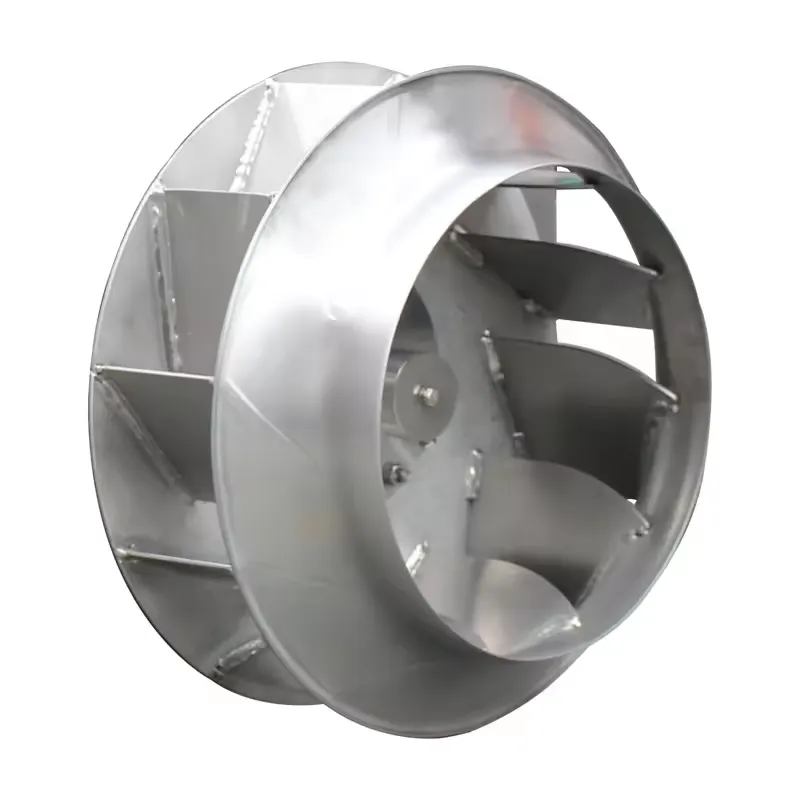
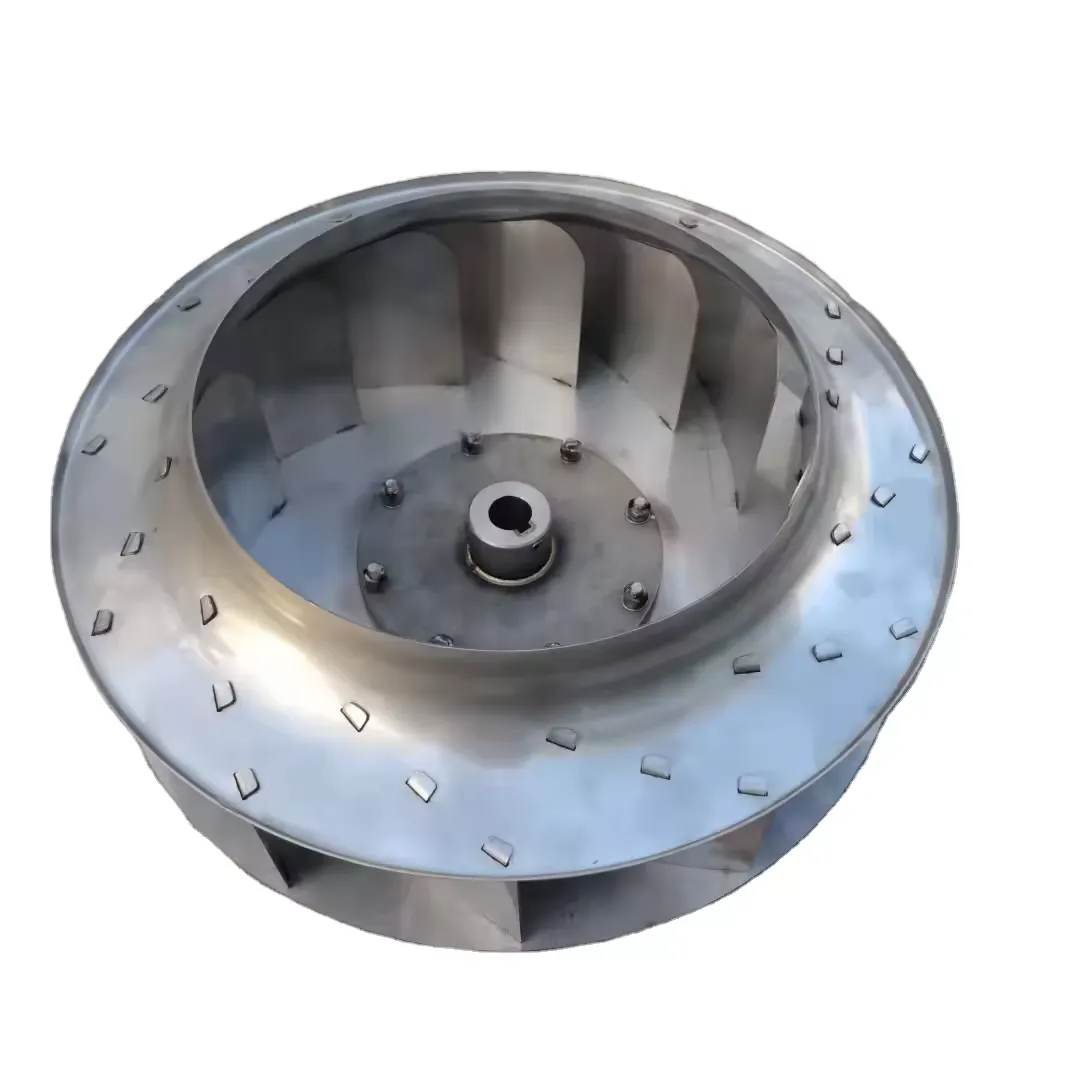
A backward curved route can be reviewed with the duty point, speed, housing, space, medium, maintenance and validation needs. Efficiency and noise remain system outcomes that require a defined project context.
Review backward curved wheel geometryConfirm the mechanical details that can change the project.
A technically similar wheel can still fail to fit if the shaft, hub, mounting, clearance, rotation reference or maintenance access is incomplete.
- 01
Set a viewing reference
Use an agreed viewing side when documenting rotation, front/back geometry and orientation-sensitive interfaces.
- 02
Capture fit-critical details
Share the drawing revision or sample, dimensions, shaft or hub, mounting, clearances and equipment access constraints.
- 03
Record maintenance conditions
Identify access, cleaning, inspection and change-control needs that should be included in the project record.
- 04
Confirm missing information
Use the engineering review to clarify which dimensions, documents or validation conditions still need confirmation.
Agree the manufacturing and inspection discussion for the actual project.
The agreed specification should define the applicable dimensions, interfaces, records, packaging and project documents. Any claimed capability must be supported by the evidence available for that scope.
CUSTOM REVIEW
Organize the engineering inputs
Start with a drawing, sample or operating data and identify the information needed for the project route.
Review custom solutions → CAPABILITIESReview the available evidence
Use capability information to discuss real manufacturing and quality documentation for the specific requirement.
Review capabilities → RFQSend the project context
Submit the duty, medium, interfaces and document requirements available today for a project review.
Contact TSLBlower →Move from duty inputs to an approval path.
This sequence makes the project assumptions visible before they become manufacturing or inspection decisions.
- 01
Submit the operating context
Send the equipment function, duty information, medium, environment, safety requirements and available part data.
- 02
Clarify the project boundary
Identify missing inputs and confirm which requirements need verified evidence or further engineering review.
- 03
Review the component route
Evaluate the product, mechanical interface and documentation path with the complete system context in view.
- 04
Agree approval and records
Set the project-specific acceptance, records and change-control requirements before proceeding.
Questions that should be resolved early.
What information is needed for an industrial blower wheel project?
Provide the equipment function, target flow and pressure, speed and control range, operating schedule, gas or air composition, dust or moisture, temperature, corrosion or cleaning context, safety requirements, drawing and interfaces, quantity and documents.
Is a backward curved wheel always best for industrial ventilation?
No. Geometry must be reviewed with the duty point, speed, housing, space, medium, maintenance and validation needs. The site should present backward curved wheels as a project route, not a universal answer.
Can TSLBlower support hazardous or corrosive media?
No support should be claimed until the exact medium, concentration, temperature, safety classification, material and documentation requirements are reviewed and TSL provides verified capability evidence.
How should balance requirements be specified?
State the applicable drawing or standard, grade or acceptance value, operating speed, measurement method, correction condition, record requirement and sampling scope. TSL must confirm its actual equipment and capability before acceptance.
Ready to review your equipment application?
Send the equipment context, air path, operating target and available wheel details for a project-specific review.