
Legacy company positioning for custom OEM blower wheel programs.
Custom Backward Curved Blower Wheels for OEM Equipment
Source backward curved and backward inclined blower wheels for ventilation, cooling, drying and other OEM equipment. Start with a legacy NB size, an existing sample or a new drawing, then confirm the duty point, housing, rotation, motor interface, material and inspection requirements for the actual project.
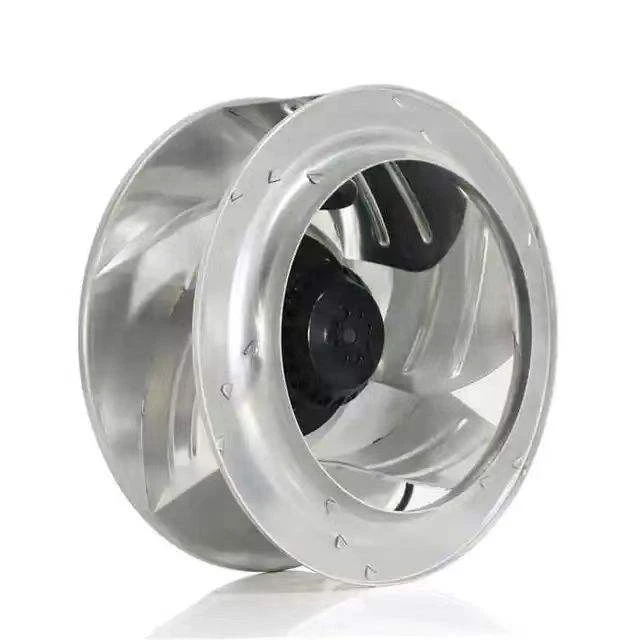
180, 190, 225, 250 and 280 mm references for project identification.
A documented motor-interface starting point, subject to drawing review.
One-piece enquiries are supported, subject to the current quotation.
Backward curved wheel constructions for different OEM projects
The original TSLBlower page included compact external-rotor wheels, open and shrouded industrial impellers, welded single-width wheels and application-specific constructions. Use the examples to identify a starting geometry, not to approve fit or performance from a photograph.
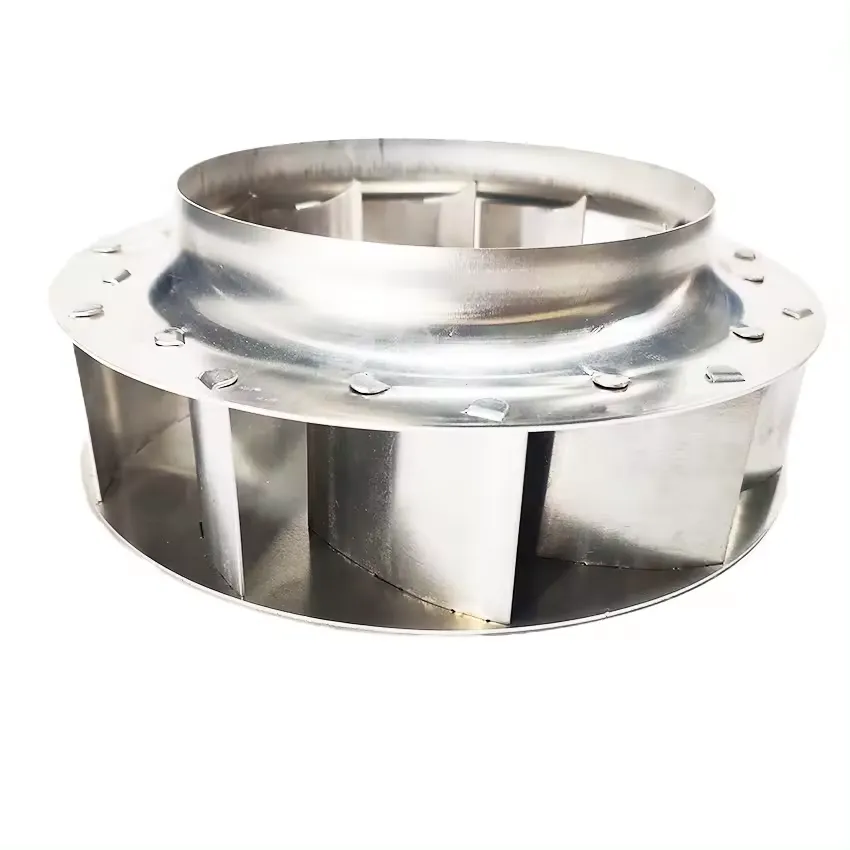
COMPACT SHROUDED
External-Rotor Wheel
A compact shrouded construction that can be reviewed against the motor diameter, wheel size, inlet geometry and mounting interface.
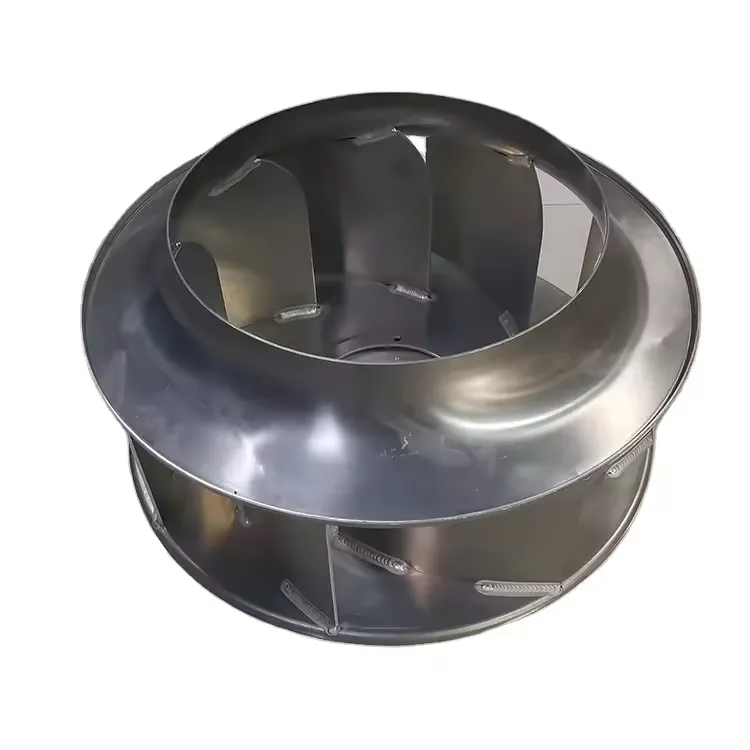
LARGE ASSEMBLY
Double-Inlet Wheel
Two inlet sides and the center structure must be defined together with overall width, shaft or hub details, rotation and surrounding clearances.
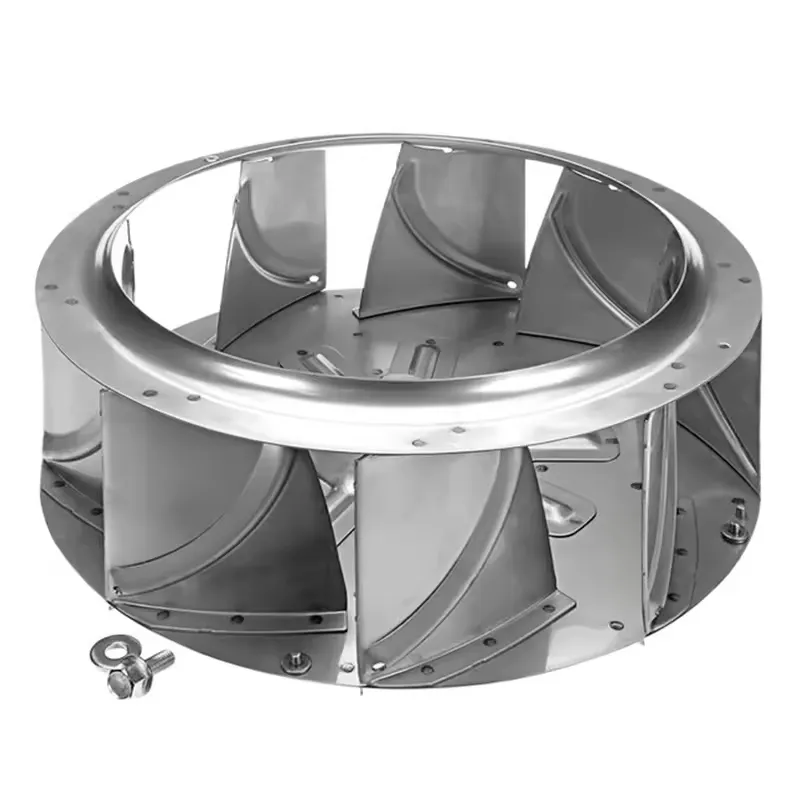
OPEN INDUSTRIAL
Open Backward Curved Impeller
An open construction for project review where the blade, back plate, inlet, shaft and housing relationship are supplied by the equipment team.
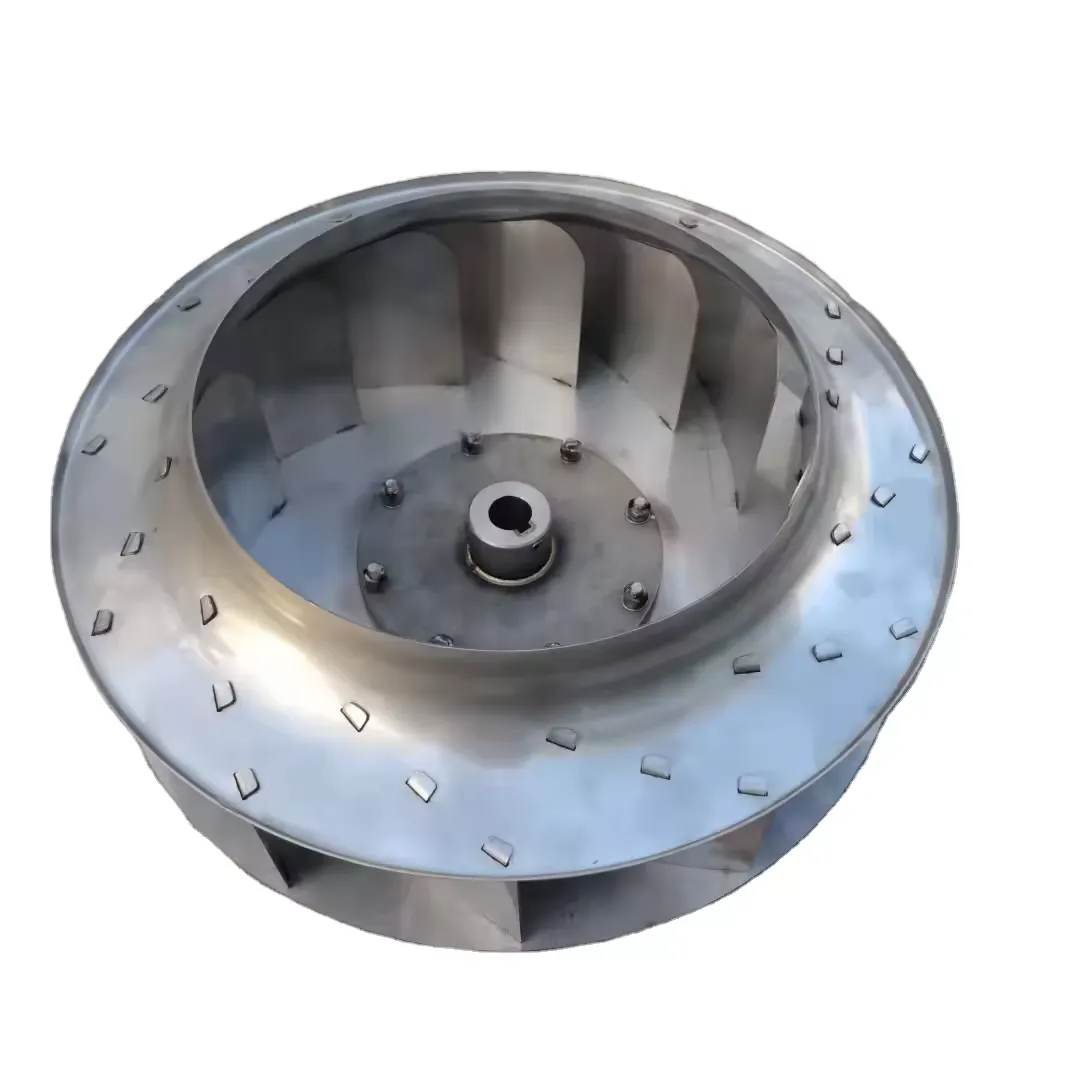
DRYING EQUIPMENT
Application-Specific Wheel
A drying-equipment example from the legacy range. Temperature, media, cleaning exposure, material grade and validation conditions must be confirmed per project.
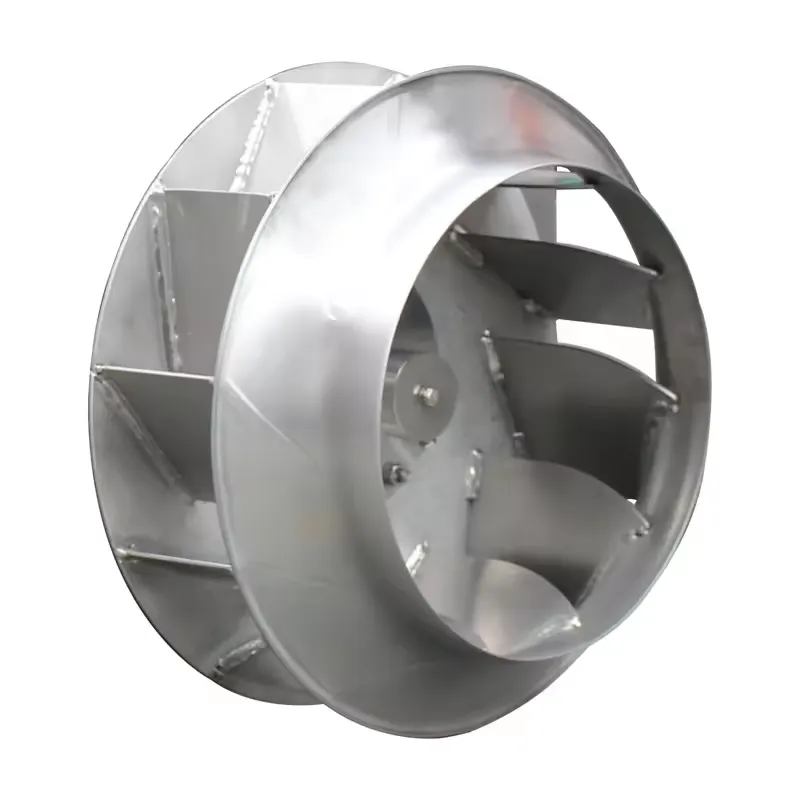
SINGLE WIDTH
Welded Ventilation Impeller
A single-width welded construction. The actual material, joining route, inspection scope and acceptance standard are confirmed from the controlled specification.
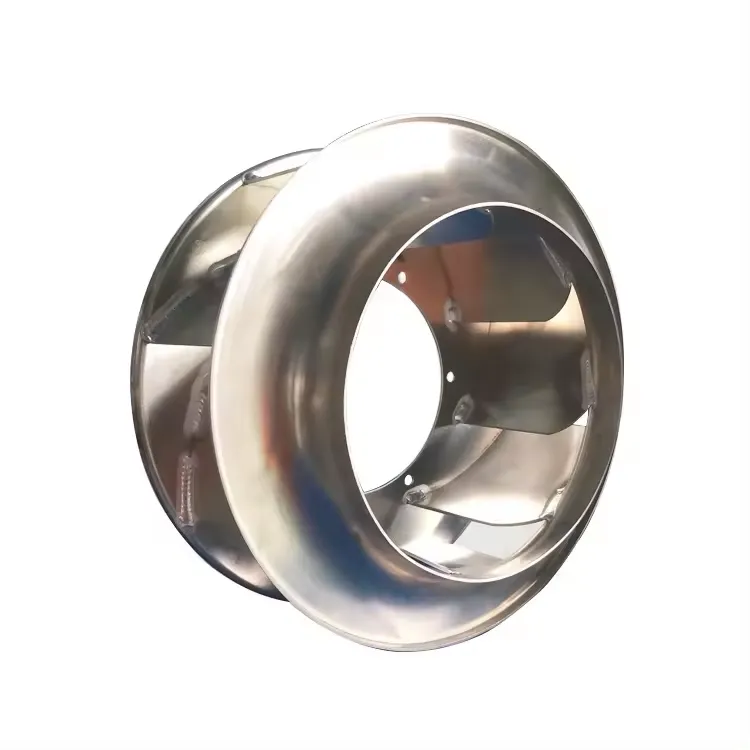
COOLING EQUIPMENT
Compact Cooling Wheel
A compact wheel example for cooling-equipment review. Send the air path, space envelope, shaft or motor interface, operating environment and target duty.
Legacy NB size references for 92 mm external-rotor projects
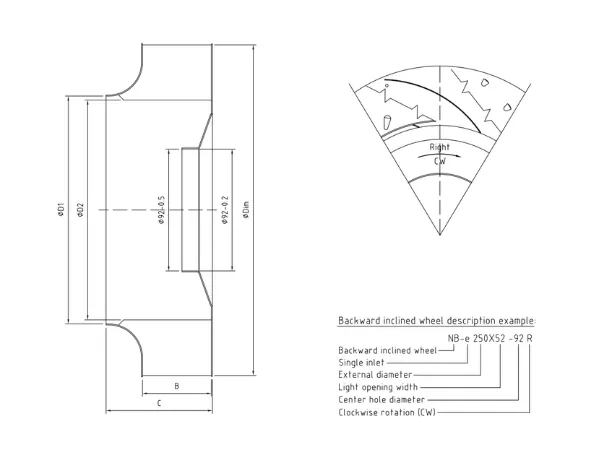
The original product page lists five backward inclined NB wheel diameters: 180, 190, 225, 250 and 280 mm. These values are useful for routing an enquiry, but do not establish stock, fit, airflow or current manufacturing availability.
Confirm before quoting
Send the motor drawing, wheel outside diameter and width, inlet dimensions, rotation viewing side, mounting method and housing clearance. The approved drawing or sample controls the current part; a legacy size label is not enough.
Select from duty, geometry and interface – not the product name alone
Backward curved and backward inclined describe a blade-direction family. The same general geometry can produce different results when the housing, inlet, speed, motor, clearances and system resistance change.
Duty point and operating range
Provide the target airflow and pressure if known, speed or motor context, operating range and the OEM validation method.
Wheel and housing geometry
Define diameter, width, blades, plates, inlet, outlet, housing geometry and the running clearances around the wheel.
Hub, shaft or motor interface
Provide the bore, hub, flange, shaft, keyway, fastener, offset, mounting direction and external-rotor motor drawing where applicable.
Environment and acceptance
Identify temperature, dust, corrosion, cleaning or media exposure, plus the material, tolerance, balance and record requirements.
Evaluate efficiency and noise at complete-system level
Backward curved wheels are often considered when an OEM is working toward airflow, pressure, efficiency or noise objectives. Those outcomes are not fixed by the wheel photograph or blade label. They depend on the selected wheel, housing, inlet and outlet, motor, speed, clearances and operating point.
Review the Selection GuideGeometry, material, joining, hub or motor interface and project-defined inspection.
Airflow, pressure, noise, efficiency, power and equipment-level validation.
Connect the approved component drawing to the OEM test condition and acceptance criteria.
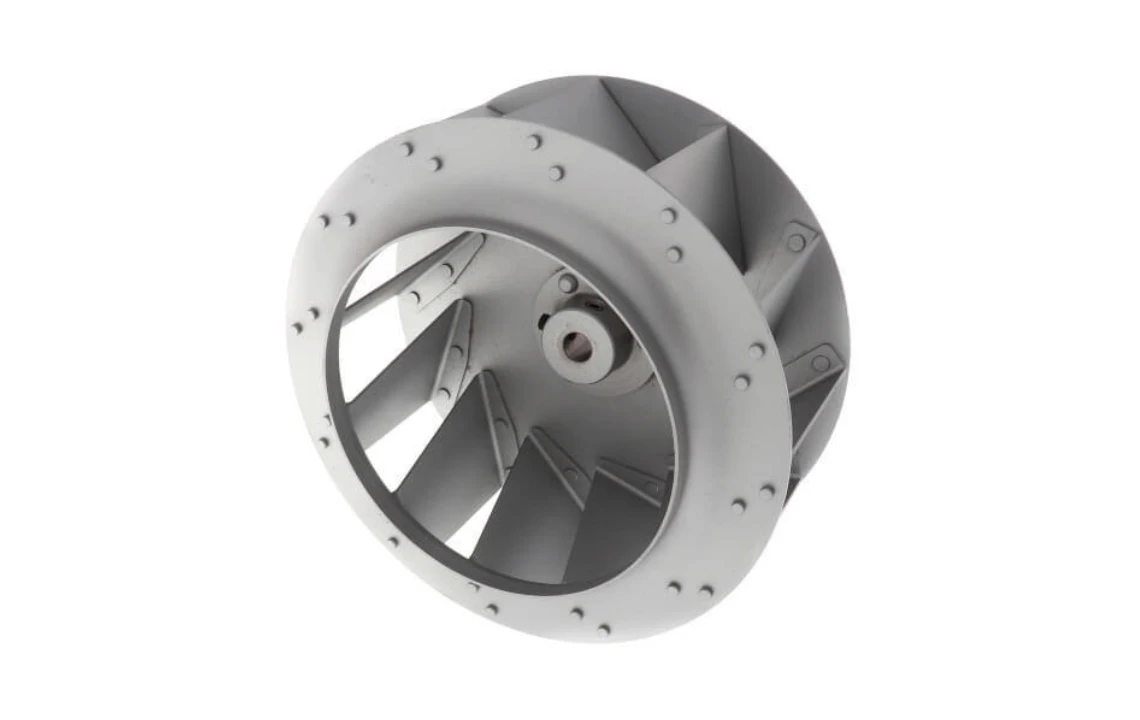
Backward curved blower wheel application routes
The legacy page identifies ventilation, drying, cooling, baking equipment, fan manufacturing, repair and distribution enquiries. Each application route starts with different system and environment inputs.
Engineering definition, manufacturing route and inspection evidence
A useful supplier review connects the input, action, approval and record for the actual part. Generic claims about precision, durability or quality do not replace scope-matched evidence.
01 / ENGINEERING
Drawing and sample review
Start from the latest drawing, labelled sample photos or an existing component. Confirm wheel designation, diameter, width, inlet, motor interface and rotation before tooling or sampling.
Review design engineering
02 / MANUFACTURING
Project-specific production route
Geometry, material, forming, joining, motor interface, tooling and order quantity determine the actual route. Timing is confirmed after technical and commercial approval.
Review manufacturing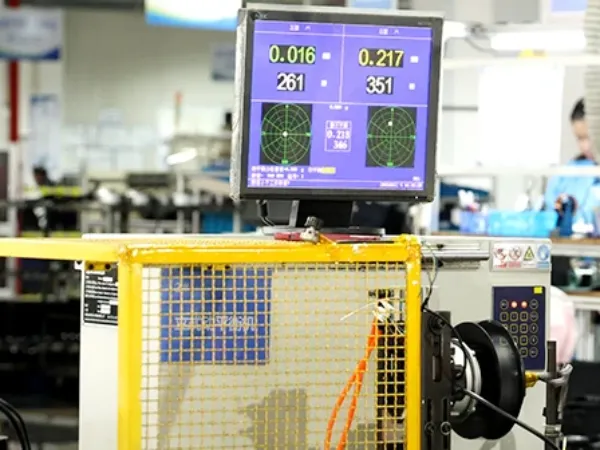
03 / QUALITY
Inspection matched to requirements
Define dimensions, interface, rotation, appearance, joining, balance requirement, sampling frequency and requested records. The applicable method and acceptance criteria belong in the order specification.
Review inspection planningInformation needed for a backward curved blower wheel quote
You can start with incomplete information. Mark unknown fields clearly so the quotation can separate confirmed inputs from the questions that still require engineering review.
| Input group | What to send | Why it matters |
|---|---|---|
| Starting reference | NB size, current drawing, old sample, equipment model or labelled photographs | Routes the enquiry to the nearest current construction. |
| Wheel geometry | OD, width, inlet, blades, plates, rotation and critical clearances | Defines the controlled component and housing relationship. |
| Mechanical interface | Motor drawing, shaft, bore, hub, flange, keyway, fastener and mounting orientation | Controls assembly, fit and load transfer. |
| System duty | Equipment, air path, target airflow/pressure if known, speed, motor and operating range | Prevents a geometry label from becoming a system-performance assumption. |
| Environment and quality | Media, temperature, dust/corrosion context, material, tolerances, balance and records | Connects construction and inspection to the real project. |
| Commercial details | Sample or production quantity, target date, destination and required documents | Supports tooling, sampling, production and logistics planning. |
Backward curved blower wheel FAQ
Commercial terms below preserve the original product-page baseline. The current drawing, quantity, material, inspection plan and quotation control the final order.
What backward curved blower wheel sizes does TSLBlower list?
The legacy NB range lists 180, 190, 225, 250 and 280 mm wheel references for a 92 mm external-rotor context. Send the motor and wheel drawings because a size label alone cannot confirm the interface or fit.
What types of backward curved wheels can be reviewed?
TSLBlower can review compact shrouded wheels, double-inlet assemblies, open industrial impellers, welded single-width wheels and customer-specific constructions. The drawing or sample determines the actual manufacturing route.
What is the MOQ for a backward curved blower wheel?
The legacy product policy accepts one-piece enquiries. Sampling, tooling, unit price and shipping are confirmed for the selected construction and project requirements.
How long do samples and production take?
The legacy baseline states approximately 10-15 days for sampling and 25-30 days for volume production. Actual timing begins after technical and commercial approval and is confirmed in the quotation.
Can you provide a sample?
Sample support is available, including custom samples before volume production. Any sample, tooling and freight charges depend on the design and destination and are confirmed before the sample order.
Where are the backward curved blower wheels manufactured?
The original product page states that TSLBlower manufactures backward curved blower wheels at its own factory in Dongguan, China. The applicable production route and evidence are confirmed for the actual project.
Can efficiency or low noise be guaranteed from the wheel alone?
No universal wheel-only result should be assumed. Efficiency, airflow, pressure and noise depend on the housing, inlet, outlet, motor, speed, clearances and operating point. Share the duty and validation conditions for engineering review.
Request a backward curved blower wheel quote
Send the closest NB size or construction, drawing or sample photos, wheel dimensions, motor or hub interface, rotation, duty context and required quantity.