
For an HVAC OEM, the blower wheel is the heartbeat of the system. A component that costs less than $50 holds the power to silence a premium air handling unit—or destroy its market reputation through excessive vibration and noise. Sourcing the right impeller is not merely a purchasing task; it is a critical engineering decision that dictates the efficiency and longevity of your final product.
The global manufacturing landscape is currently divided into two distinct tiers. On one side, you have the Legacy Giants—massive conglomerates ideal for standard, high-volume orders but often rigid regarding customization and lead times. On the other, a new wave of Agile Specialists has emerged, prioritizing rapid prototyping, zero minimum order quantities (MOQ), and precision engineering for mid-market OEMs. Choosing between them requires a clear understanding of your specific production volume and technical requirements.
To help you navigate this supply chain decision, we reviewed the top 7 manufacturers for 2026. Our evaluation rigorously tested for ISO 1940-1 balancing compliance, production capacity, and supply chain flexibility. Whether you need 100,000 units a month or a single custom prototype, this guide identifies the right partner to safeguard your product’s performance.
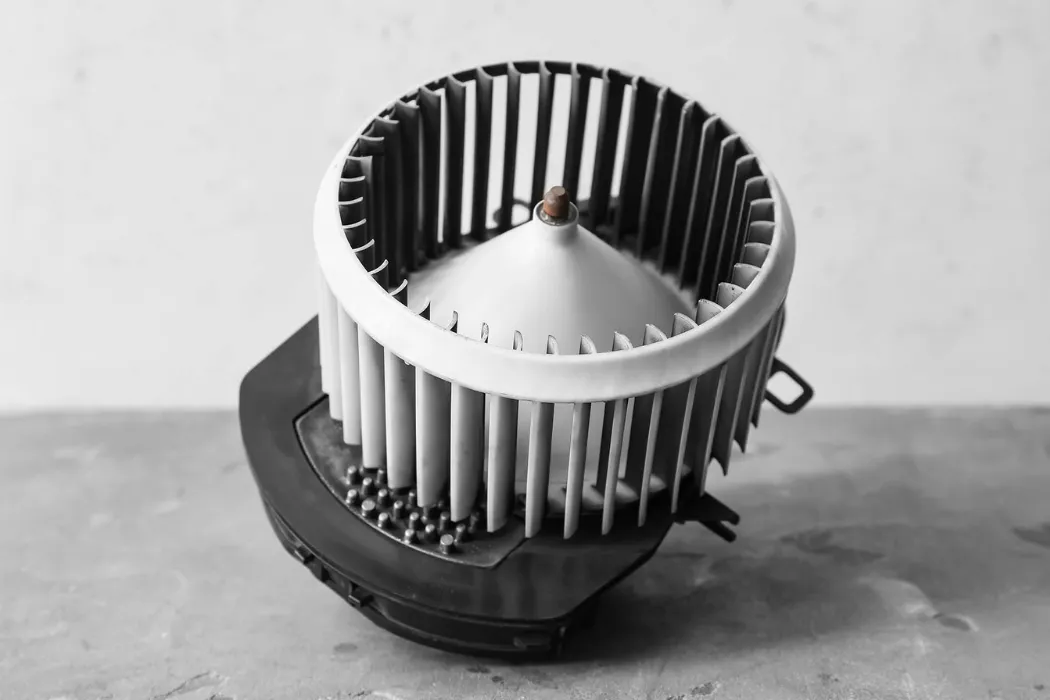
Why Is Choosing the Right Manufacturer a Critical Decision?
The Hidden Costs of Poor Quality (Noise and Vibration)
In HVAC systems, quality is not a subjective metric; it is a physics problem where even a single gram of imbalance can lead to catastrophic system failure. A manufacturer’s ability to control concentricity and balance directly impacts the end-user experience.
- ISO 1940-1 Grade G6.3 is the minimum industry standard for commercial fans, but high-precision applications often require Grade G2.5, which reduces permissible residual unbalance by over 60%.
- Excessive radial run-out (typically >0.5mm) generates low-frequency hums that can easily exceed residential noise limits of 45-50 dBA, leading to immediate consumer returns.
- Vibration caused by poor balancing is the leading cause of premature motor bearing failure, potentially shortening the operational lifespan of your equipment by 30-50%.
Selecting a manufacturer with automated, multi-plane balancing capabilities is not optional—it is your primary insurance policy against expensive warranty claims and brand damage.
Supply Chain Risks: Lead Times and Production Halts
A low unit price loses all strategic value if a delayed shipment halts your entire assembly line. The stability of your production schedule depends entirely on your supplier’s capacity and responsiveness.
- Industry data suggests that unplanned production downtime in manufacturing can cost upwards of $25,000 per hour in lost revenue and idle labor costs.
- “Agile” manufacturers like TSLBlower consistently offer lead times of 20-25 days for bulk production, whereas legacy giants often require 8-12 weeks for non-standard orders.
- High Minimum Order Quantities (MOQs), often exceeding 500 units from large suppliers, tie up valuable capital in inventory and stifle R&D flexibility for smaller product runs.
Your supply chain requires a partner capable of scaling from a single prototype to 100,000 units/month without holding your cash flow hostage with rigid volume demands.
Regulatory Compliance and Export Standards (UL/CE/RoHS)
Global market access depends entirely on the material certifications and safety standards maintained by your impeller supplier. Ignorance of these regulations can lead to customs seizures and legal liability.
- Components must strictly adhere to RoHS directives, ensuring hazardous substances like lead and mercury remain below 0.1% by weight.
- UL and CE certifications are mandatory for HVAC equipment entering the US and European markets; using non-compliant sub-components puts your entire system’s certification at risk.
- For industrial oven applications, 304 Stainless Steel materials must be verified for 300°C+ heat resistance to prevent dangerous creep deformation under load.
Always verify that your manufacturer provides full material traceability and compliance documentation (CoC) to ensure your products can legally enter your target markets.
Who Are the Top 7 Blower Wheel Manufacturers in the Market?
We have curated this list based on three key metrics: Global Reach, Production Agility, and Technical Compliance. This is not a ranking from “best to worst,” but a guide to finding the “best fit” for your specific business model.
| Manufacturer | HQ Location | Core Specialty | Best For… |
|---|---|---|---|
| ebm-papst | Germany | EC Technology & Integrated Fans | High-end, energy-efficient complete systems. |
| Lau Industries | USA | Standard HVAC Catalog | North American residential replacements & large OEMs. |
| TSLBlower | China | Customization & Zero MOQ | SMEs, Rapid Prototyping, & Custom Industrial Ovens. |
| Revcor | USA | Residential Airflow | Consumer appliances and residential HVAC units. |
| Nicotra Gebhardt | Italy/Germany | Heavy Industrial Fans | Large-scale commercial ventilation projects. |
| Punker | Germany | High-Efficiency Wheels | Data centers and specialized cooling applications. |
| Ziehl-Abegg | Germany | Biomimetic Fans | Ultra-quiet, nature-inspired noise reduction designs. |
ebm-papst (Germany) – The Technology Giant
Widely recognized as the global leader in ventilation technology, ebm-papst is synonymous with high-efficiency EC (Electronically Commutated) motors and integrated fan solutions.
- Innovation: Pioneers of “GreenTech,” focusing on intelligent aerodynamics and integrated motor-impeller units.
- Scale: Massive global footprint with over 15,000 employees and revenue exceeding €2.5 billion.
- Limitation: Their focus is primarily on selling complete fan assemblies (motor + wheel), which can be inflexible if you only need the impeller wheel itself for a custom drive assembly.
Expert Verdict: The “Rolls-Royce” option. Ideal if you need a plug-and-play, high-efficiency solution and have the budget to match, but less suitable for sourcing standalone metal components.
Lau Industries (USA) – The Legacy Standard
A staple in the North American HVAC market, Lau (now part of the massive Nortek/Madison ecosystem) has defined the standard for residential and light commercial blower wheels for decades.
- Catalog Depth: Offers an extensive catalog of standard sizes that are widely used in US-manufactured furnaces and air handlers.
- Logistics: Excellent domestic distribution network in the USA, ensuring quick replacements for standard parts.
- Production: Heavily focused on high-volume automated production for established OEM giants.
Expert Verdict: The safe bet for North American OEMs needing standard replacements. However, their rigidity on MOQs makes them difficult for startups or custom projects to access.
TSLBlower (China) – The Agile Customization & Zero MOQ Specialist
Positioned as the “Engineer’s Partner,” TSLBlower (TSL Industry) fills the critical gap between massive volume manufacturers and local job shops. They specialize in high-precision metal impellers with extreme supply chain flexibility.
- Zero MOQ Policy: Unlike competitors requiring 500+ unit orders, TSL allows orders as small as 1 unit, enabling low-risk R&D and market testing.
- Speed: Offers 24-hour quote turnarounds and 3-7 day sample delivery, significantly faster than the industry average of 3 weeks.
- Capabilities: In-house mold workshop and balancing labs certified to ISO 1940-1 G6.3, capable of producing 100,000 units/month.
Expert Verdict: The top choice for agile OEMs and industrial oven manufacturers who need custom specifications (material, bore size) without the burden of massive inventory commitments.
Revcor (USA) – The Residential Airflow Expert
Revcor promotes “Revolutionary Airflow” and is a dominant player in the residential appliance and HVAC sector, particularly known for their patented “Swept Fan” blade designs.
- Focus: Highly specialized in maximizing airflow for condenser fans and residential blowers.
- Engineering: Strong focus on improving efficiency for SEER ratings in consumer appliances.
- Market: primarily serves large-scale white goods manufacturers (washers, dryers, AC units).
Expert Verdict: Excellent for large-scale consumer appliance contracts where improving energy efficiency ratings is the primary goal.
Nicotra Gebhardt (Italy/Germany) – The Industrial Heavyweight
Formed by the merger of two European giants, Nicotra Gebhardt is the go-to source for heavy-duty centrifugal fans used in massive commercial and industrial infrastructure.
- Product Range: Known for large belt-driven fans and smoke extraction systems capable of withstanding extreme conditions.
- Performance: Their RQM MultiEvo systems claim some of the highest system efficiencies in the market.
- Target: Skyscrapers, tunnel ventilation, and large industrial plants.
Expert Verdict: If you are building the ventilation system for an airport or a stadium, this is your supplier. Overkill for small-to-medium equipment.
Punker (Germany) – The High-Efficiency Leader
Self-proclaimed as the “Wheel World,” Punker focuses almost exclusively on the development and manufacturing of fan wheels, rather than full fan assemblies.
- Specialization: They produce distinct “General HVAC” and “Data Center” lines, optimizing blade geometry for specific static pressure requirements.
- Material: Strong expertise in aluminum and composite materials for weight reduction.
- Engineering: Highly respected for their “General HVAC” line which reduces noise in air handling units (AHUs).
Expert Verdict: A direct competitor to TSL in terms of technical focus on the wheel itself. High quality, but typically carries a premium European price tag.
Ziehl-Abegg (Germany) – The Blue Technology Innovator
Ziehl-Abegg is famous for their “Biomimetic” designs, often modeling fan blades after owl wings or humpback whales to achieve ultra-quiet operation.
- Technology: Their “ZAbluefin” technology sets the benchmark for acoustic performance in the industry.
- Application: Heavily utilized in elevators, clean rooms, and sensitive environments where noise is critical.
- Materials: Pioneers in using high-performance composite materials (ZAmid) that replace steel.
Expert Verdict: The technology leader for silence. If your budget is flexible and silence is your #1 KPI, their biomimetic designs are unmatched.
How Should You Evaluate and Select a Manufacturer?
Once you have narrowed down your list, the vetting process must go beyond price comparison. A true manufacturing partner contributes to your engineering success, while a transactional vendor merely supplies parts.
Assessing In-House Manufacturing vs. Assembly Only
Many suppliers claim to be manufacturers but are actually “assemblers” who buy stamped blades and hubs from third parties. This adds layers of cost and reduces quality control.
- True Manufacturers (like TSLBlower) own their molding workshops. This allows them to modify blade angles or hub diameters in-house without waiting weeks for external tooling.
- Ask for a video tour or photos of their stamping dies and injection molds. If they cannot show you the raw tooling, they are likely outsourcing key processes.
- Benefit: Direct control over tooling reduces the risk of “tolerance stack-up” errors that occur when components from different sub-suppliers don’t fit perfectly.
Prioritize suppliers who control the entire vertical process, from raw sheet metal stamping to final balancing.
Verifying Mold Design and Tooling Capabilities
For custom projects, the cost and ownership of molds are contentious points. A transparent manufacturer will offer clear terms on Tooling Amortization.
- Amortization: Negotiate a deal where tooling fees are refunded after a certain volume (e.g., 10,000 units) is reached.
- Ownership: Ensure the contract states that you own the mold if you pay for it. This prevents the manufacturer from using your custom design to supply your competitors.
- Speed: A capable engineering team should deliver DFM (Design for Manufacturing) feedback on your 3D CAD files within 48 hours.
If a supplier takes a week just to quote a mold, their engineering agility is likely insufficient for rapid product development.
Understanding the “Total Cost of Ownership” (Price vs. Quality)
The unit price (FOB) is only the tip of the iceberg. The “Total Cost of Ownership” includes logistics, quality failures, and communication overhead.
- Quality Costs: A 2% failure rate due to poor balancing requires you to rework finished units, costing 10x more than the impeller itself.
- Logistics Efficiency: Experienced exporters optimize pallet stacking for 20GP/40HQ containers, potentially lowering shipping costs by 15-20% per unit compared to inefficient packing.
- Currency & Terms: Look for suppliers who offer stable pricing valid for 3-6 months to protect you from raw material (steel/aluminum) market fluctuations.
Don’t just buy the cheapest wheel; buy the supply chain that costs you the least to manage.
What Red Flags Should You Watch Out For in Vetting?
In the digital age, a polished website can easily hide a disorganized trading operation. Use this checklist to filter out high-risk suppliers.
| Vetting Criteria | ✅ Genuine Manufacturer | 🚩 Trading Company / Middleman |
|---|---|---|
| Product Range | Focused (e.g., only impellers & fans). | Everything (e.g., motors, switches, pumps, lights). |
| Technical Answers | Engineer answers specific technical questions directly. | “Let me check with the factory” or vague delays. |
| Customization | Willing to modify tooling or make prototypes. | Pushes standard catalog items; refuses changes. |
| Address Verification | Located in industrial zones (e.g., Dongguan, Chang An). | Located in residential or commercial office towers. |
| Certification | Certificates (ISO/UL) match the company name. | Certificates are blurred or belong to another entity. |
Ambiguous Production Locations and Lack of Factory Audits
If a supplier refuses a video audit or cannot clearly state where their production line is located, walk away. Transparency is the foundation of trust.
- Legitimate factories like TSLBlower openly invite audits and can provide live video walkthroughs of their 8,000m² facility in Dongguan.
- Be wary of “factories” that are actually just showrooms in a wholesale market. They often lack the testing equipment to verify the quality of what they sell.
Inconsistent Sample Performance vs. Bulk Delivery
The “Golden Sample” trap is common: you receive a perfect handmade prototype, but the production batch is riddled with defects.
- The Fix: Demand a CPK (Process Capability Index) report for critical dimensions (like bore size and run-out) with your sample.
- If they don’t know what CPK is, they likely lack the statistical quality control processes needed for mass production consistency.
What Role Do Quality Control and ISO Certifications Play?
Certifications are not just badges; they are proof of a standardized process that ensures every wheel performs exactly like the last one.
| Metric | Standard | Why It Matters |
|---|---|---|
| Dynamic Balancing | ISO 1940-1 Grade G6.3 | Ensures vibration is within safe limits for motor bearings. |
| High-Precision Balancing | ISO 1940-1 Grade G2.5 | Required for high-speed or ultra-quiet applications. |
| Quality Management | ISO 9001:2015 | Guarantees consistent workflow and traceability. |
| Safety Compliance | UL / CE / RoHS | Mandatory for legal entry into US/EU markets. |
ISO 9001 and The Importance of Standardized Workflows
ISO 9001 certification means the factory has a documented system for handling errors. If a batch is defective, do they have a protocol to trace it back to the specific machine and raw material batch?
- Without traceability, a single quality issue becomes a mystery that cannot be solved, leading to repeated failures.
- TSLBlower maintains full traceability, allowing them to pinpoint the exact production date and material batch for every shipment.
Dynamic Balancing Standards (ISO 1940-1 G6.3)
Balancing is the single most critical quality check for an impeller. “Balanced” is not enough; it must meet a specific ISO grade.
- Grade G6.3 is the standard for general industrial fans.
- Grade G2.5 is for precision equipment.
- Ask for a Balance Report generated by the balancing machine. If they balance by hand without digital verification, consistency is impossible.
Material Testing: Salt Spray and Tensile Strength Analysis
For outdoor HVAC units or industrial ovens, material failure is not an option.
- Salt Spray Test (ASTM B117): Verifies corrosion resistance. Galvanized steel should last 72+ hours, while treated surfaces can last 500+ hours.
- Overspeed Testing: Ensures the wheel won’t explode if the motor malfunctions and spins too fast. A robust design should withstand 120% of the rated RPM without deformation.
How Do Production Capacity and MOQ Affect Your Supply Chain?
In the blower wheel market, “bigger” is not always better. A mismatch between your production volume and your supplier’s capacity can lead to two fatal scenarios: either your small order is deprioritized, or your supplier cannot keep up with your growth.
The “Startup Trap”: Dealing with High Minimum Order Quantities
Legacy manufacturers build their efficiency on volume. For them, setting up a production line for fewer than 500 units is unprofitable. This creates a “Startup Trap” for new HVAC brands or specialized equipment manufacturers.
- Inventory Burden: Forced high MOQs tie up thousands of dollars in stagnant inventory, killing the cash flow needed for marketing and R&D.
- Design Rigidity: If you are forced to buy 1,000 units of Version 1.0, you cannot iterate to Version 1.1 until that stock is depleted, slowing down your innovation cycle.
Avoid suppliers who treat your low-volume pilot runs as a nuisance.
TSLBlower’s Model: How Zero MOQ Supports Innovation
Agile manufacturers like TSLBlower have re-engineered their production flow to accommodate “High-Mix, Low-Volume” manufacturing. This is a strategic advantage for OEMs in the testing phase.
- Zero MOQ: You can order a single custom impeller for a prototype. This allows for real-world testing without a five-figure financial commitment.
- Scalability: This model acts as an incubator. You validate the market with 10 units, scale to 100, and eventually reach mass production without changing suppliers.
Scalability: Moving from Prototype to 100,000+ Units
While starting small is crucial, your partner must also handle success. A “garage shop” might handle the prototype but fail when you land a major distribution deal.
- Verify the supplier’s monthly capacity. TSLBlower, for instance, operates an 8,000m² facility with a capacity of 100,000 units/month.
- Ask about their “surge capacity.” Can they add a shift to handle a seasonal spike in demand? A factory running at 95% capacity has zero room for your emergency orders.
How Important Are Communication and Technical Support?
The technical complexity of airflow dynamics means you need more than a salesperson; you need an engineering partner. The speed and quality of communication are leading indicators of future project success.
The Need for Speed: 24-Hour Quotes and Rapid Prototyping
In a competitive market, time-to-market is everything. Waiting two weeks just to get a price quote is a red flag for organizational inefficiency.
- Standard: Leading agile suppliers provide detailed quotes within 24 hours.
- Sampling: Custom sample production should not take months. Look for lead times of 3-7 days for samples, enabled by in-house mold workshops.
- Impact: Rapid iteration allows you to test three different blade designs in the time it takes a competitor to source just one.
Engineering Collaboration: CAD Support and Airflow Simulation
Modern HVAC design requires precise integration. Your supplier should be an extension of your R&D team.
- 3D Models: The manufacturer must provide STEP or IGS files within days of a request, allowing your engineers to check clearances in SolidWorks before cutting metal.
- Simulation: Advanced suppliers can offer guidance on the P-Q curve (Pressure vs. Flow) to ensure the wheel operates at its peak efficiency point within your housing.
Post-Sales Support and Warranty Claims
Mistakes happen. The difference lies in the resolution. A “Ghost Supplier” disappears when a claim arises; a partner stays to fix it.
- ECN (Engineering Change Notice): If you need to modify a dimension after production starts, how is it handled? Agile suppliers have formal ECN processes to update molds quickly.
- Warranty: Look for a clear 12-month warranty on workmanship and material defects.
What Are the Emerging Trends in Blower Wheel Manufacturing?
The HVAC industry is not stagnant. As regulations tighten and technology evolves, your component suppliers must adapt. Sourcing from a forward-looking manufacturer ensures your products remain competitive.
The Shift Toward EC (Electronically Commutated) Compatibility
As global energy efficiency standards (like ErP in Europe) become stricter, the market is moving toward EC motors. This impacts the blower wheel design.
- Aerodynamics: Wheels must now be optimized for the variable speeds and higher torque characteristics of EC motors.
- Efficiency: Manufacturers are increasingly using CFD (Computational Fluid Dynamics) to reduce turbulence at the blade tips, squeezing every percentage point of efficiency out of the system.
Advanced Materials: High-Temp Alloys for Industrial Ovens
Standard galvanized steel loses structural integrity above 230°C. There is a growing demand for specialized alloys in the commercial kitchen and industrial baking sectors.
- 304 Stainless Steel: Now the standard for hygiene and heat resistance (up to 400°C).
- Reinforced Hubs: Trends show a move toward custom-machined hubs that dissipate heat away from the motor shaft, prolonging bearing life in hot environments.
Automated Production Lines and Robotized Balancing
The days of manual balancing are numbered. Automation is the only way to achieve the consistency required by modern OEMs.
- Robot Arms: Used for transfer and stamping to prevent handling damage (dents/scratches) that occurs with manual labor.
- Auto-Weight Correction: Advanced balancing machines now automatically weld or clip weights, removing human error from the most critical quality control step.
Frequently Asked Questions (FAQ)
Who are the top blower wheel manufacturers in China?
Top manufacturers include TSLBlower (TSL Industry), known for customization and zero MOQ, alongside larger, volume-focused players like Wolong and Dunli. The choice depends on whether you need a dedicated engineering partner (TSL) or a mass-market commodity supplier.
Which companies make OEM HVAC blower wheels?
Major global OEMs often source from Lau Industries, Revcor, and ebm-papst. However, many mid-sized OEMs are shifting to agile specialists like TSLBlower to avoid the long lead times and high MOQs associated with the legacy giants.
How do I verify a blower wheel factory’s credentials?
Always request three things: 1) A live video audit of the production floor (specifically the balancing area), 2) Valid ISO 9001:2015 and ISO 1940-1 certificates, and 3) A CPK report for a critical dimension from a recent production run.
What are the major brands of centrifugal fans?
The market leaders are ebm-papst, Ziehl-Abegg, and Nicotra Gebhardt. These brands typically sell complete fan assemblies. For component sourcing (just the wheel), manufacturers like Punker and TSLBlower are more specialized.
Do manufacturers sell directly to the public?
Most legacy manufacturers (Lau, Revcor) sell only through distributors or to large OEMs. TSLBlower is a rare exception, offering direct factory sales to small businesses and repair technicians with no minimum order quantity.
Where are Carrier/Trane blower wheels made?
Global HVAC giants utilize a hybrid supply chain, manufacturing some components in-house while outsourcing others to approved Tier-1 suppliers in China, Mexico, and the USA, depending on the specific product line and regional market.
Conclusion
Selecting a blower wheel manufacturer is a balancing act between Quality, Speed, and Scalability. While legacy giants like ebm-papst offer undeniable brand prestige, their rigid structures often fail the agility test required by modern OEMs and startups.
If your priority is a “set it and forget it” standard part for a massive production run, a catalog supplier like Lau Industries is a solid choice. However, if you require a partner who offers engineering collaboration, rapid prototyping, and the flexibility to order anywhere from 1 to 100,000 units, TSLBlower stands out as the premier solution for 2026.
Your HVAC system’s reputation rests on the silence and reliability of its airflow. Don’t let a rigid supply chain or a generic component compromise your product. Choose a manufacturer that treats your business—regardless of its size—as a priority.